Blog
Raising children today feels like juggling flaming torches while riding a unicycle—exciting, exhausting, and requiring skills nobody taught you in school. Between morning chaos, homework battles, teaching inclusivity, and managing your own career, modern parenting demands a toolkit of strategies that work in real life, not just in theory.
The good news? Small, intentional changes in how you structure your days, design your spaces, and set your boundaries can transform family life from survival mode to something closer to thriving. This resource connects the dots between four essential pillars of family wellness: the rhythms that start your day, the environments that support learning, the values that shape character, and the boundaries that protect everyone’s wellbeing. Each area builds on the others, creating a foundation for calmer mornings, focused children, and parents who don’t feel perpetually stretched too thin.
Why Daily Routines Matter for Family Harmony
Think of your morning routine as the operating system for your entire day. When it runs smoothly, everything else loads faster. When it crashes, you spend the rest of the day in recovery mode. The difference between a household that leaves on time with smiles and one that departs in chaos often comes down to predictable structures that remove friction points.
Morning stress doesn’t just make everyone grumpy—research consistently shows it impacts children’s ability to focus once they reach school. A child who starts the day rushed, hungry, or emotionally dysregulated arrives at their desk already behind. Their brain is still processing cortisol from the conflict over shoes or the panic about forgotten homework, leaving less mental bandwidth for learning.
The solution isn’t waking up an hour earlier (though sometimes that helps). It’s about eliminating decision fatigue through preparation. When children know exactly what to expect—clothes laid out the night before, breakfast choices pre-decided, backpacks packed and waiting by the door—their brains conserve energy for the school day ahead. This principle applies equally to common morning flashpoints:
- Heavy sleepers: Experiment with gradual light alarms, vibrating devices, or placing the alarm across the room to require physical movement
- Digital device temptation: Establish a “devices sleep in the kitchen” rule to prevent the dopamine spiral that derails getting ready
- Slow eaters: Serve smaller portions that feel achievable, use visual timers, and offer grab-and-go options for truly time-crunched mornings
The goal isn’t military precision—it’s building sustainable rhythms that feel natural rather than forced. When routines become habits, they require less willpower to maintain, freeing up your mental energy for the unexpected challenges every parent faces.
Creating Spaces That Support Learning
Your home environment either works with your child’s brain or against it. The physical setup where children study, read, and complete homework isn’t just about aesthetics—it directly influences their attention span and mental stamina. A child trying to focus at a kitchen table facing a busy hallway fights an uphill neurological battle that has nothing to do with motivation.
Location and Physical Setup
The best homework spot balances two competing needs: enough separation from distractions to enable focus, but enough proximity to allow parental support when needed. For younger children, this often means a quiet corner of a common room rather than isolated bedroom exile. The ergonomics matter too—feet should touch the floor or a footrest, elbows should bend at roughly 90 degrees at the desk surface, and screens should sit at arm’s length at eye level. When bodies feel comfortable, minds can concentrate longer.
Managing Distractions Strategically
Visual and auditory distractions compete for the same neural resources children need for homework. This doesn’t mean creating a sensory deprivation chamber—it means being intentional. Face desks toward blank walls rather than windows with squirrel drama unfolding outside. Use noise-canceling headphones or white noise to mask household sounds. Store toys and screens out of sight lines. Even small changes—like closing the pantry door so snacks don’t beckon visually—can extend focus windows significantly.
Lighting That Energizes Rather Than Exhausts
Poor lighting causes eye strain and mental fatigue that parents often mistake for laziness or lack of effort. Overhead lighting alone creates harsh shadows on work surfaces. The solution: layer lighting sources. Combine natural light when possible with a desk lamp positioned to illuminate the work area without glare. Warm-toned bulbs (2700-3000K) feel more comfortable for evening homework than harsh cool-white fluorescents. If your child squints, rubs their eyes frequently, or complains of headaches during homework, lighting is often the culprit.
Organization Systems That Prevent “Lost Pencil” Syndrome
The five minutes spent searching for scissors, the backup eraser, or the blue folder adds up to hours of wasted time and mounting frustration across a school year. Effective organization isn’t about expensive storage solutions—it’s about designated homes for everything. Use clear containers so children can see supplies at a glance. Label drawers with words or pictures. Keep duplicate supplies (extra glue sticks, backup pencils) so you’re not scrambling mid-project. When the barrier to starting homework drops, resistance often drops with it.
Raising Children in an Inclusive World
Teaching children to navigate diversity with genuine respect and curiosity isn’t optional in our interconnected world—it’s essential preparation for success in education, careers, and relationships. Yet many parents worry about saying the wrong thing or inadvertently reinforcing stereotypes, so they avoid conversations altogether. This silence itself sends a message.
The cognitive benefits of diversity exposure extend beyond social skills. Children who regularly interact with people from different backgrounds develop stronger critical thinking abilities, creativity, and perspective-taking skills. Their brains literally build more neural pathways for understanding complexity and ambiguity—advantages that translate across all learning domains.
Moving from tolerance to active acceptance requires intentional practice at home:
- Celebrate differences explicitly: Point out and appreciate variations in family traditions, foods, languages, and celebrations as interesting rather than strange
- Curate media thoughtfully: Actively seek books, shows, and movies featuring diverse characters in non-stereotypical roles—not just stories “about” diversity, but stories where diverse characters simply exist as fully realized people
- Model curiosity over discomfort: When children ask awkward questions in public (and they will), respond with calm factual answers rather than shushing them, teaching that differences are normal topics of conversation
- Examine your own assumptions: Children absorb unstated biases from watching who you trust, fear, or dismiss—your actions teach more powerfully than your words
This work isn’t about achieving perfection or never making mistakes. It’s about creating a home culture where respect for human dignity is non-negotiable, questions are welcomed, and children learn that diversity enriches rather than threatens their world.
Managing Boundaries as a Working Parent
The dual identity of provider and caregiver creates unique pressures that often leave parents feeling they’re failing at both roles simultaneously. You’re distracted during the work presentation thinking about the permission slip you forgot to sign, then distracted during dinner thinking about the email you forgot to send. This constant mental toggling doesn’t just feel exhausting—it undermines your effectiveness in both domains.
Setting boundaries isn’t selfish—it’s the oxygen mask principle in action. When you protect your own capacity, you have more to give. This requires both external boundaries (with bosses, colleagues, and school expectations) and internal boundaries (with your own guilt and perfectionist standards).
Modeling Healthy Limits for Children
Children who watch parents answer work emails at 10 PM learn that boundaries are optional. Children who hear parents politely decline additional commitments with “That doesn’t work for our family right now” learn that protecting time and energy is normal and healthy. Your example teaches more powerfully than any lecture about self-care.
Strategic Outsourcing and Help-Seeking
If you can afford to outsource tasks you dislike or that drain your energy disproportionately—whether that’s house cleaning, grocery delivery, or lawn care—the math often favors spending money to buy back time. That purchased time isn’t lazy; it’s strategic resource allocation. Similarly, accepting help from family, coordinating carpools with other parents, or hiring a neighborhood teen for mother’s helper duties expands your capacity without requiring superhuman energy.
Addressing the Guilt That Shadows Working Parents
Guilt thrives in the gap between idealized parenting images and real life. You’re not at the school volunteer breakfast. You missed the field trip. Your child ate cereal for dinner twice this week. Here’s the truth research supports but guilt obscures: children don’t need perfect parents. They need present-enough, consistent-enough, loving-enough parents who model resilience, problem-solving, and the reality that adults have responsibilities beyond the family.
Recognizing Burnout Before It Becomes Crisis
Parental burnout looks different than workplace burnout. Warning signs include emotional numbness toward your children, fantasizing about escape, feeling like you’re just going through motions, persistent exhaustion that sleep doesn’t fix, or increased irritability over minor issues. These aren’t character flaws—they’re distress signals. Addressing them requires the same seriousness you’d apply to any health concern: seeking support, adjusting expectations, and potentially restructuring obligations.
The Power of Transition Rituals
The mental shift from work mode to parent mode (or vice versa) doesn’t happen instantly. Creating a brief transition ritual—even just five minutes sitting in your car taking deep breaths, a quick walk around the block, or changing clothes—signals your brain that you’re switching roles. This buffer prevents you from bringing work stress into family time or family chaos into work focus. It’s not wasted time; it’s the reset button that makes you more effective in both spaces.
Parenting doesn’t come with a manual because every family writes their own. The strategies that transform your mornings, learning spaces, values education, and boundaries won’t look identical to your neighbor’s—and that’s exactly as it should be. Start with the area causing the most friction right now, implement one small change, and build from there. Progress compounds when you’re patient enough to let it.

How to Truly “Switch Off” Work Mode Before You Walk in the Door
The key to a peaceful evening isn’t just leaving work on time; it’s performing a deliberate mental “reboot” to shed…
Read more
How to Teach Cultural Awareness to Children in a Homogeneous Area?
Raising culturally aware children in a homogeneous environment isn’t about collecting cultural artifacts; it’s about intentionally building their cognitive toolkit…
Read more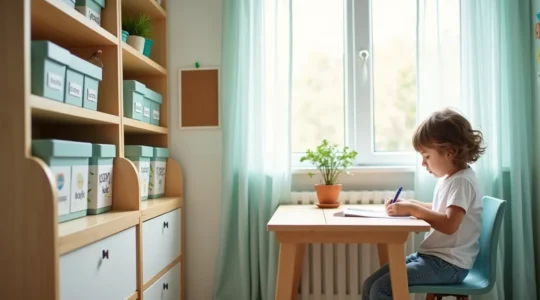
How to Design a Study Space That Actually Boosts Your Child’s Concentration?
Creating a study space that boosts focus is less about furniture and more about building a ‘cognitive ecosystem’ that manages…
Read more
How to Exit the House on Time Every Morning Without Yelling?
In summary: Morning chaos is often a symptom of high stress hormones (cortisol), which negatively impacts your child’s ability to…
Read more