Health & Wellness
Child health and wellness extends far beyond the absence of illness. It encompasses the intricate web connecting physical development, emotional regulation, sleep quality, nutritional foundations, and mental resilience. For parents navigating the complexities of raising children, understanding these interconnected systems transforms anxiety into confidence and reactivity into proactive care.
The modern landscape of childhood presents unique challenges: screens that disrupt sleep cycles, processed foods that impact behavior, sedentary lifestyles that limit brain development, and a culture that often dismisses children’s emotional experiences. Yet within these challenges lies an opportunity to build a comprehensive wellness framework that supports not just survival, but thriving. This foundation begins with understanding that a child’s body, mind, and emotional world are inseparable—each influencing the others in profound ways.
Physical Development and Movement Competency
Physical growth follows predictable patterns, yet parental anxiety around these metrics often overshadows the more important question: is my child developing functional movement skills that support future learning?
Decoding Growth Charts Without the Comparison Trap
Growth charts represent statistical distributions, not standards of normalcy. When a pediatrician plots your child at the 25th percentile for height, this means 75% of same-age children are taller—nothing more. The curve itself matters far less than consistency along that curve over time.
Parents often fall into the mindset trap of comparison, measuring their child against siblings, classmates, or developmental milestones listed online. This creates unnecessary stress. What matters most is individual growth velocity: is your child following their own trajectory? Sudden deviations warrant attention; steady progress along any percentile typically does not.
Practical tracking between doctor visits provides reassurance without medical equipment. Measure height against a doorframe mark every few months, note when shoe sizes change, and observe energy levels. These simple data points often reveal more about wellness than any single measurement.
Movement as Brain Development
The connection between body movement and cognitive function is not metaphorical—it’s neurological. Gross motor skills (running, jumping, climbing) build neural pathways that later support fine motor tasks like writing, and even abstract skills like reading comprehension.
Children who spend excessive time in containers—car seats, strollers, high chairs—miss critical opportunities for vestibular system development. This system, located in the inner ear, governs balance and spatial awareness. Its proper development requires movement through space, particularly activities that change head position relative to gravity.
Creating an indoor gym for winter months doesn’t require expensive equipment. Consider these essentials:
- A low climbing structure or sturdy furniture arrangement for safe scrambling
- Soft mats or cushions for tumbling and rough play
- Suspended items to jump toward or bat at, activating core muscles
- Open floor space for dancing, animal walks, and chase games
The goal isn’t early sports specialization, but rather foundational movement competency: the ability to control one’s body with confidence, which builds both physical and emotional resilience.
Sleep Foundations for Health and Learning
Sleep is when the body repairs tissue, consolidates memories, and regulates hormones that control appetite and mood. Yet many families struggle with bedtime battles, night wakings, and chronically tired children whose behavior deteriorates as a result.
Sleep Hygiene Rituals That Work
The chemistry of sleep onset depends on melatonin production, which begins as light dims and body temperature drops. This natural process can be supported or sabotaged by the wind-down routine implemented in the hour before bed.
A structured wind-down phase might include these sequential steps:
- Dim lights throughout the home 60 minutes before target bedtime
- Warm bath (the subsequent cooling mimics the natural temperature drop that triggers sleep)
- Quiet activities only: reading, gentle conversation, simple puzzles
- Consistent sequence of the final routine: teeth, toilet, story, song, lights out
Identifying and removing stimulating triggers is equally important. Screen time within two hours of bed suppresses melatonin production through blue light exposure. Rough physical play, exciting stories, or emotional conversations activate the sympathetic nervous system when you need the parasympathetic system engaged. Even well-intentioned stall tactics—”one more story,” “I’m thirsty,” “I need to tell you something”—should be anticipated and addressed within the routine itself.
Optimizing the Sleep Environment
The bedroom itself plays a crucial role in sleep cycle quality. Deep sleep stages, where growth hormone releases and cellular repair happens, require specific conditions.
Temperature matters more than most parents realize. The ideal sleep environment sits between 60-67°F (15-19°C)—cooler than most households maintain during waking hours. Darkness should be complete; even small light sources can disrupt circadian rhythms. White noise machines can mask environmental sounds, but nature sounds or music, while soothing, may prevent the deepest sleep stages because the brain continues processing melodic patterns.
Regarding natural sleep aids versus melatonin supplements, the distinction is important. Melatonin should be reserved for specific situations (jet lag, circadian rhythm disorders) under medical guidance. Natural support comes from daytime sunlight exposure, which calibrates the body’s internal clock, and from removing sleep disruptors like caffeine (hidden in chocolate and some medications) and irregular bedtimes.
Emotional Intelligence and Mental Wellness
The long-term value of emotional quotient (EQ) often surpasses traditional IQ in determining life satisfaction, relationship quality, and even career success. Yet emotional education rarely receives the same systematic attention as academic learning.
Cultivating Emotional Awareness
Teaching children to name and process feelings begins with expanding their emotional vocabulary beyond “good,” “bad,” “happy,” and “sad.” Introduce nuanced terms: frustrated, disappointed, excited, overwhelmed, proud, embarrassed. When a child can distinguish between anger and hurt, they can communicate needs more effectively.
Clarifying the difference between empathy (feeling with someone) and sympathy (feeling for someone) matters more than semantic precision suggests. Empathy requires standing alongside someone in their experience without trying to fix it immediately. When a child says, “I’m nervous about the test,” empathy responds with “That tight feeling in your stomach is real—tests can feel big.” Sympathy might say, “Don’t worry, you’ll do fine,” which invalidates their current emotional reality.
Creating a daily emotional check-in routine embeds this practice into family culture. At dinner or bedtime, each person shares:
- One moment they felt strong emotion today
- The name of that emotion
- What their body felt like during that moment
- One thing that helped or might help next time
This ritual destigmatizes all emotions as normal human experiences while building self-awareness.
Managing Stress and Anxiety
Anxiety exists on a spectrum from helpful (alertness before crossing a street) to debilitating (panic attacks that prevent school attendance). Understanding this range helps parents respond appropriately rather than dismissing valid feelings or catastrophizing normal worries.
Somatic tools offer immediate stress control by engaging the vagus nerve, which connects the brain to major organs and regulates the stress response. Deep breathing techniques work because they send a physiological message that overrides mental panic: “If I’m breathing slowly, I must be safe.”
For young children, gamifying breathwork increases engagement. Try “smell the flower, blow out the candle” for slow inhales and exhales, or “balloon belly” where they watch their stomach inflate and deflate. For older children, box breathing (inhale for four counts, hold for four, exhale for four, hold for four) provides a portable tool for any stressful situation.
Tracking stress triggers reveals patterns that might otherwise go unnoticed. A child who melts down every Tuesday evening might be overwhelmed by the cumulative effect of early-week demands, pointing toward the need for Tuesday afternoon downtime rather than additional activities.
Critically, parents must examine whether they’re transferring their own stress to children. Anxious parental energy—hovering, over-preparing, catastrophizing potential problems—teaches children the world is dangerous. Calm, confident parenting models resilience even when genuine concerns exist.
Preventive Healthcare Practices
Preventive care transforms healthcare from reactive crisis management into proactive health optimization. This includes both medical interventions and lifestyle foundations that strengthen natural defenses.
Childhood Immunizations: Managing Logistics and Emotions
Vaccination visits carry emotional weight for both children and parents. Addressing common fears with facts helps: serious vaccine reactions are exponentially rarer than serious disease complications from the illnesses they prevent. Combination vaccines (like MMR or DTaP) reduce the number of shots while providing the same protection—they’re formulated together because the immune system easily handles multiple antigens simultaneously.
Reducing pain and anxiety during the shot itself involves simple strategies: breastfeeding or offering a bottle during injection for infants, sitting upright rather than lying down for toddlers, and distraction through conversation or videos for older children. Topical numbing cream applied an hour beforehand can minimize physical discomfort.
Warning against arbitrary delays is important: vaccine schedules are designed around when children are most vulnerable to specific diseases. Delaying measles vaccine because “we don’t travel internationally” ignores that measles remains endemic in many areas and spreads through casual contact.
Well-Child Visits and Immune Support
Well-child visits serve purposes beyond growth measurements. They track developmental milestones, screen for vision and hearing issues, address parental concerns, and establish the medical relationship that builds trust before illness strikes. These visits justify their time investment through early detection of issues most treatable when caught young.
Strengthening natural defenses through lifestyle centers on nutrition and microbiome health. The outdated idea of a sterile environment has been replaced by understanding that diverse microbial exposure actually trains the immune system. Children who play outside, have pets, and aren’t bathed excessively often develop stronger immune responses.
Using food as medicine for immunity emphasizes whole foods rich in vitamin C (citrus, bell peppers), vitamin D (fatty fish, fortified dairy), zinc (meat, legumes), and probiotics (yogurt, kefir). Supplements have their place, but they supplement—they don’t replace—nutrient-dense food.
Nutrition Education Without Food Anxiety
Educating children about macronutrients walks a delicate line between empowerment and creating food anxiety. The goal is understanding food as fuel without moral judgments that label foods “good” or “bad.”
Explaining food as fuel works well through the car analogy: protein builds and repairs (like replacement parts), carbohydrates provide energy (like gasoline), and fats support brain function and nutrient absorption (like oil that keeps the engine running smoothly). This framework answers “why do I need to eat this?” without requiring a nutrition degree.
Visualizing portion sizes helps children self-regulate. A preschooler’s protein serving should be about the size of their palm, carbohydrates the size of their fist, and fats a thumb-sized portion. These proportions scale naturally with growth.
The role of sugar deserves honest discussion without demonization. Sugar provides quick energy, tastes good, and appears in many foods—including fruit. The distinction lies in added sugars versus naturally occurring sugars packaged with fiber and nutrients. A child who learns “sugar is poison” may develop guilt around normal eating; one who learns “sugar without other nutrients makes my energy crash” can make informed choices.
Empowering lunchbox choices might mean offering three protein options, two carbohydrate options, and letting the child assemble their lunch. This respects their autonomy while maintaining nutritional boundaries.
Digital Wellness in a Connected Age
Regulating digital consumption protects both mental health and encourages real-world skill development. The challenge isn’t eliminating screens—an unrealistic goal in modern life—but establishing intentional boundaries around their use.
The neurological effects of excessive blue light extend beyond sleep disruption. Screen time triggers dopamine release, the same neurotransmitter involved in reward and motivation. When children receive this easy dopamine hit repeatedly, other activities (reading, outdoor play, creative projects) that require more effort for delayed rewards become less appealing. This isn’t addiction in the clinical sense, but it does reshape motivation patterns.
Setting up technical barriers proves more effective than relying on willpower. Screen time limits built into devices, content filters that block inappropriate material, and physical charging stations outside bedrooms create structural support for healthy habits. These work best when implemented for the entire family—parents modeling digital discipline reinforces its value.
Distinguishing between creative use (coding, digital art, music production) and passive scrolling (infinite social media feeds, autoplay videos) helps prioritize screen time quality over simple quantity. Thirty minutes creating stop-motion animation develops skills; thirty minutes watching others’ videos does not.
The danger of devices as emotional crutches emerges when screens become the default response to boredom, frustration, or sadness. Children need to learn that discomfort is temporary and they possess internal resources to manage it. Handing over a device to stop a tantrum teaches that escape is the solution; helping them breathe through big feelings teaches resilience.
Planning whole-family tech breaks—whether daily (dinner hour screen-free), weekly (Sunday morning hikes), or seasonal (summer camp, vacation days)—demonstrates that connection, adventure, and rest exist beyond digital spaces.
Child wellness is not a destination but an evolving practice. By understanding how physical development, sleep, emotional intelligence, preventive care, nutrition, and digital habits interconnect, parents can build a foundation that supports resilience through every stage of growth. Each small intentional choice compounds over time, shaping not just health outcomes but the child’s relationship with their own body, emotions, and potential.

How to Teach Kids About Protein and Carbs Without Diet Culture?
Contrary to popular belief, teaching kids about nutrition isn’t about creating lists of ‘good’ and ‘bad’ foods. The key is…
Read more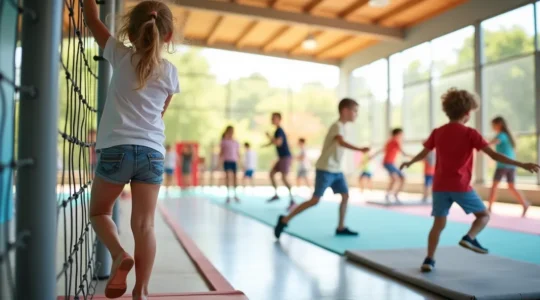
From Chaos to Coordination: How to Channel Your Child’s Hyperactivity into Powerful Physical Skills
Contrary to popular belief, the goal isn’t just to tire out a “hyperactive” child. It’s to strategically fulfill their brain’s…
Read more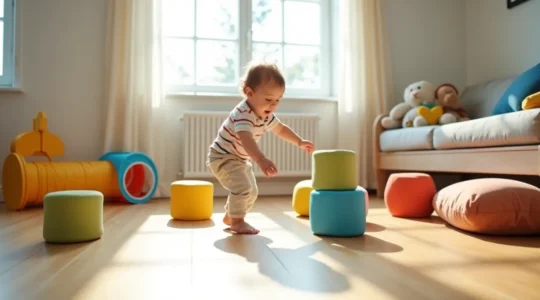
A Parent’s Guide to Spotting and Supporting Gross Motor Delays in Children Under 5
Feeling anxious about your child’s clumsiness or physical milestones? The key is to look beyond *what* they can do and…
Read more
How to Measure Your Child’s Anxiety Levels Without Being Obsessive?
The key to managing your child’s anxiety is not to become a data-obsessed detective, but to become a calm, regulated…
Read more
How to Teach “Box Breathing” to a Hyperactive Child?
In summary: Teaching box breathing to a hyperactive child is less about counting and more about sequencing energy from high…
Read more
How to Spot Subtle Signs of Anxiety in Children Under 10?
Spotting childhood anxiety isn’t about finding a single “symptom,” but about recognizing a persistent pattern of distress that disrupts your…
Read more
Why Your Child Wakes Up Grumpy Despite 10 Hours in Bed?
The widespread belief that more sleep hours automatically equal better rest is a fundamental misunderstanding of pediatric sleep science; the…
Read more
How to Create a Bedtime Routine That Puts Kids to Sleep in 20 Minutes?
In summary: The primary obstacle to quick sleep is not disobedience but high levels of the stress hormone, cortisol. An…
Read more
How to Get the Most Out of Your 15-Minute Pediatrician Visit?
The key to a productive pediatrician visit isn’t a longer list of questions, but a fundamental shift in your role…
Read more
How to Boost Your Child’s Immune System Naturally Before Winter?
Contrary to popular belief, a resilient immune system isn’t built by avoiding germs, but by intelligently training it with a…
Read more