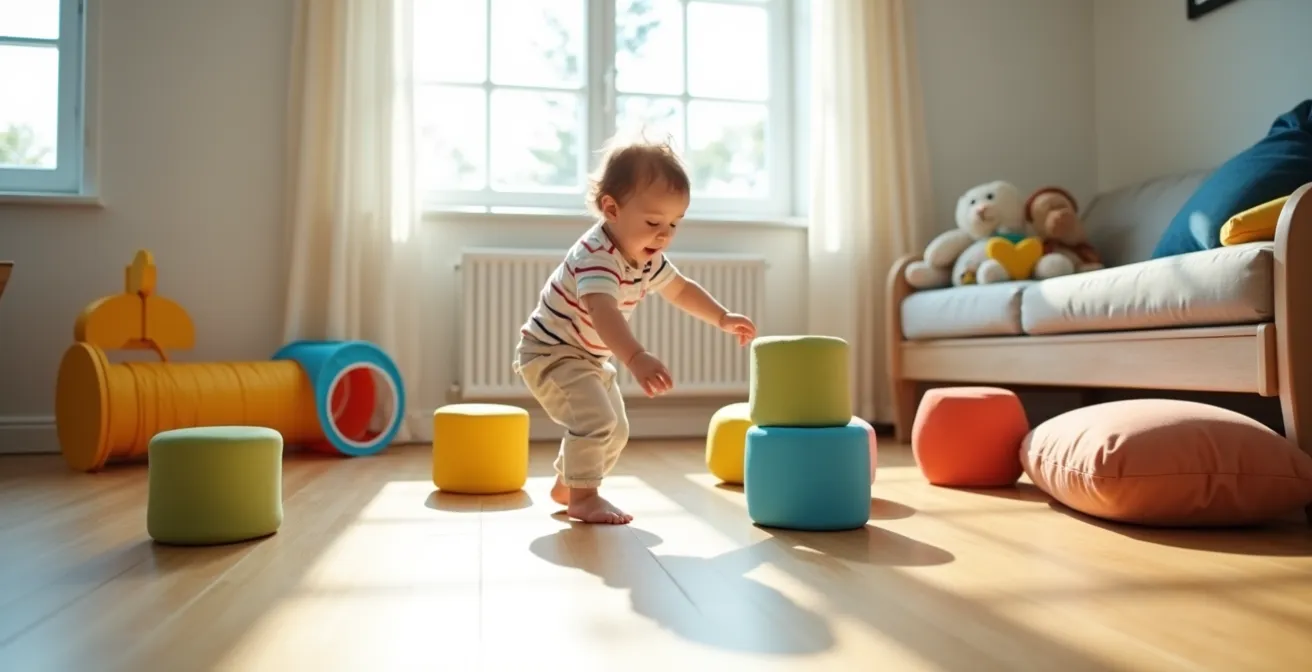
Feeling anxious about your child’s clumsiness or physical milestones? The key is to look beyond *what* they can do and focus on *how* they do it.
- Weak core strength is a common culprit, impacting everything from running to sitting still in class.
- Parents are the best observers; your insights into your child’s movement quality are more valuable than any generic checklist.
Recommendation: Use this guide to become a “developmental detective,” turning everyday play into a powerful tool for building skills and confidently communicating your concerns to healthcare providers.
As a parent, it’s natural to watch your child’s development with a mix of awe and anxiety. You see them stumble, avoid the climbing frame, or struggle to keep up with their peers, and a question surfaces: “Is this normal, or should I be worried?” While countless online charts list developmental milestones, they often create more questions than answers. They tell you *what* your child should be doing, but not *why* they might be struggling or *how* their movements look and feel.
This guide offers a different perspective, one I use as a pediatric physical therapist. We’re going to move beyond simple checklists and empower you to become a proactive observer of your child’s development. The real clues aren’t just in whether your child can jump, but in the quality of that jump. The answer isn’t just about reaching a milestone, but about building the foundational blocks of movement that will support them for a lifetime, from the playground to the classroom.
We will explore the surprising link between core strength and a child’s ability to focus, show you how to turn your living room into a therapeutic playground, and help you understand the difference between strength and balance. Most importantly, this guide will equip you with the knowledge and confidence to know when to be concerned and how to have a productive conversation with your pediatrician, transforming your worry into informed action.
Summary: A Parent’s Guide to Spotting and Supporting Gross Motor Delays
- Why Core Strength Is Essential for Sitting Still in Class?
- How to Build an Obstacle Course in Your Living Room?
- Balance vs. Strength: What Does Your Child Need More?
- The “Container Baby” Mistake That Delays Walking
- When to Worry if Your Child Isn’t Jumping on Two Feet?
- Why Poor Posture at the Desk Reduces Study Stamina?
- The Mistake of Waiting for the Doctor to Notice Developmental Delays
- How to Channel Hyperactivity into Productive Physical Skills?
Why Core Strength Is Essential for Sitting Still in Class?
When we think of “core strength,” images of athletes and gym workouts often come to mind. But for a child, a strong core is the fundamental anchor for nearly every activity, especially one that seems simple: sitting still. A child’s core muscles provide the stability needed to hold their trunk upright against gravity. When these muscles are weak, their body has to work overtime just to stay in the chair, leaving little energy for learning.
You may see this manifest in ways that are often mislabeled as behavioral issues. Fidgeting, for example, isn’t always a sign of an inability to focus; it’s often the body’s way of re-engaging tired muscles. Children with core weakness may show difficulty maintaining proper posture for sitting activities, leading to constant wiggling to stay comfortable. This underlying physical fatigue directly impacts their ability to concentrate on the teacher.
Observing the signs of a weak core can be revealing:
- Slouching: Consistently slumping over their desk or in their chair.
- Propping: Using their hands to hold their head up or leaning heavily against the desk.
- Fidgeting: Hooking arms over the chair, rocking, or even sliding out of their seat.
- Preference for Lying Down: Choosing to lie on the floor to watch TV or read, as it requires less core engagement than sitting upright.
A simple shift can make a world of difference. In one case observed by an occupational therapist, a toddler struggling with letter work and focus was guided to wrap their feet around the chair legs. This small adjustment provided the external stability their body lacked, allowing them to instantly refocus on their task. This shows that the drive to learn is often there, just waiting for the physical foundation to support it.
How to Build an Obstacle Course in Your Living Room?
One of the most effective and enjoyable ways to build gross motor skills is through play, and a homemade obstacle course is the perfect tool. It transforms “exercise” into an exciting adventure, motivating your child to practice essential skills like balancing, climbing, and jumping without even realizing it. The goal is to create a series of multi-step challenges that target different aspects of motor development.
An obstacle course is more than just physical activity; it’s a workout for the brain. It challenges motor planning, which involves three key steps: conceiving an idea (ideation), sequencing the steps, and executing the movement. A challenge like “crawl under the table, then balance across the pillows” requires your child to think, plan, and then do. This builds crucial cognitive skills alongside physical ones.
Here are some essential elements to include in your living room course:
- Something to balance on: Use a line of masking tape on the floor, a low plank of wood, or a series of pillows to walk across. This targets the vestibular system.
- Something to crawl under or through: A tunnel made of chairs and a blanket, or a large cardboard box.
- Something to climb over: Sturdy couch cushions or a small step stool.
- Something to jump into or from: A hula hoop on the floor to jump into, or a small step to jump off of.
- “Heavy work” stations: Include pushing a laundry basket full of toys or carrying a few books from one point to another for proprioceptive feedback.
The beauty of a homemade course is its adaptability. You can make it as simple or complex as your child needs, gradually increasing the difficulty as their confidence and skills grow. It’s play-based therapy at its best.

As you can see, everyday household items can be transformed into powerful tools for development. The goal is not perfection, but participation and fun. By incorporating activities that use both sides of the body (bilateral integration) and provide sensory input, you create a rich environment for motor learning.
Balance vs. Strength: What Does Your Child Need More?
When a child seems clumsy or uncoordinated, parents often assume they just need to get stronger. While core strength is a critical foundation, sometimes the root issue lies in their balance system (vestibular system) or their body’s ability to sense its position in space (proprioception). Differentiating between a strength deficit and a balance issue is key to providing the right kind of support. They are not the same, and they require different interventions.
A child with poor core strength may have trouble with proactive postural control—they can’t anticipate instability when reaching for a toy and may lose their balance. They often present as “sensory seekers,” crashing into things or enjoying rough-and-tumble play because the heavy input helps their brain register where their body is. In contrast, a child with vestibular or balance issues struggles with reactive control—they can’t catch themselves effectively after a stumble. They are often “cautious movers,” fearful of heights, swings, or unstable surfaces because their balance system is over-sensitive and easily overwhelmed.
This comparative guide can help you identify which area might be a greater challenge for your child. By observing their tendencies, you can gain insight into the underlying cause of their motor difficulties.
| Assessment Area | Balance/Vestibular Issues | Strength/Core Issues |
|---|---|---|
| Postural Control Type | Reactive control problems (catching after stumble) | Proactive control problems (anticipating instability when reaching) |
| Child Profile | ‘Cautious Mover’ – avoids heights and movement, over-sensitive balance system | ‘Sensory Seeker’ – crashes, seeks heavy input, compensating for poor body awareness |
| Observable Signs | Fear of unstable surfaces, difficulty with directional changes | Slouching, can’t maintain upright sitting for 60 seconds |
| Intervention Focus | Gradual vestibular input, confidence building | Core strengthening, proprioceptive activities |
Understanding this distinction is powerful. A child who needs strength benefits from “heavy work” like pushing and pulling. A child who needs balance support benefits from gradual, confidence-building activities like swinging gently or walking on slightly wobbly surfaces. A professional assessment can provide a definitive answer, but these observations give you a more targeted lens through which to view your child’s needs.
The “Container Baby” Mistake That Delays Walking
In our modern world, baby “containers”—bouncers, walkers, jumpers, and car seat carriers used outside the car—are everywhere. They seem convenient and safe, but over-reliance on them can inadvertently hinder a child’s natural motor development. This phenomenon, often called “Container Baby Syndrome,” restricts the very movements a baby needs to practice to develop the muscles for sitting, crawling, and eventually walking. While not every child will experience a delay, studies show that approximately 9% of children are at risk for gross motor skill delay, and lack of free movement is a contributing factor.
A baby’s “work” is to move. When placed on the floor, they can push up, roll, pivot, and explore. Each of these movements builds critical strength in their neck, back, shoulders, and core. A container, by design, props a baby up, removing the need for them to engage these muscles. It holds them in a fixed position, preventing the rich sensory input and problem-solving opportunities that come from navigating their environment freely.
The antidote is simple and free: floor time. Creating a safe, baby-proofed space on the floor is the single most important thing you can do to encourage motor development.
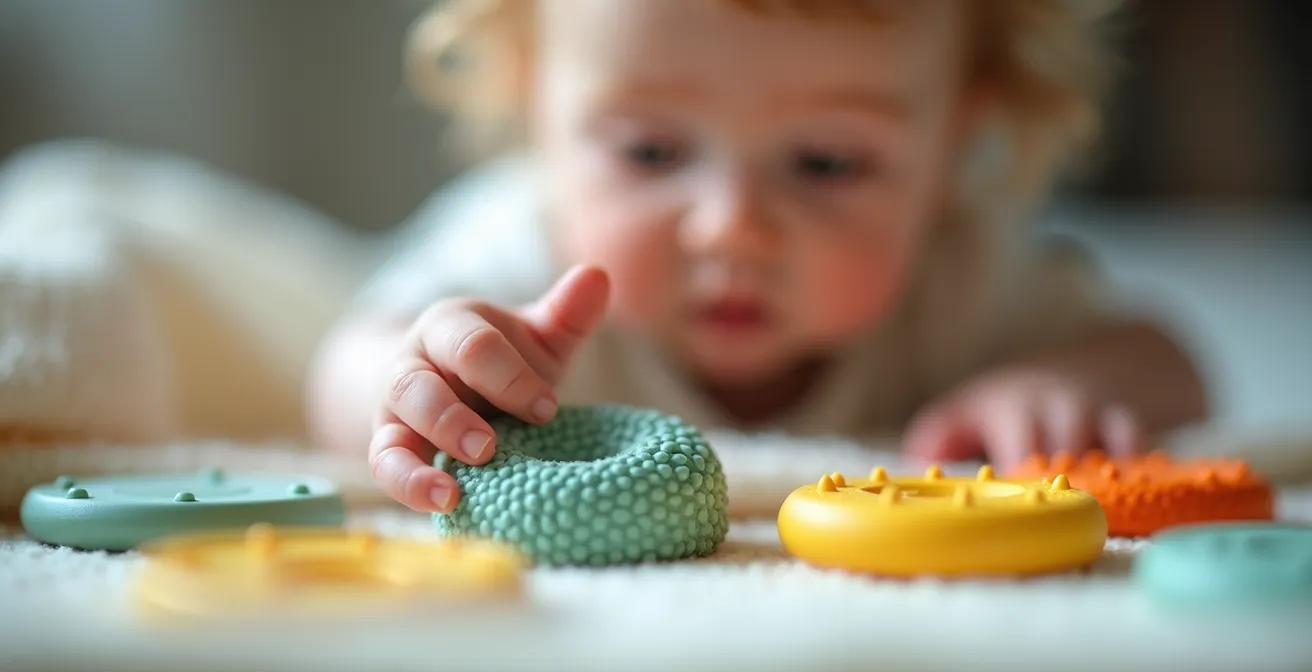
Instead of structured confinement, floor time offers a world of sensory exploration. The feeling of a rug, a wooden floor, or a textured play mat provides valuable information to their developing nervous system. To make floor time effective:
- Start with Tummy Time: Begin with just a few minutes a day and gradually increase the duration as their muscles strengthen. Place engaging toys just out of reach to encourage them to lift their head and pivot.
- Encourage Varied Movement: Allow them to practice combat crawling, rocking on their hands and knees, and rolling from side to side.
- Create a “Yes” Space: Ensure the area is safe so you don’t have to constantly say “no.” This gives them the freedom to explore and build confidence in their own body and abilities.
When to Worry if Your Child Isn’t Jumping on Two Feet?
Jumping is a major motor milestone that requires a complex combination of balance, strength, body awareness, and motor planning. It’s a skill that delights children and often serves as a benchmark for parents. So, when should a child be jumping, and when is it a cause for concern? Typically, toddlers begin to experiment with jumping, often starting with one foot, around 18-24 months. They are learning to bend their knees and push off, even if they don’t get much air.
As a therapist, I look at the overall picture, not just one isolated skill. However, there are general timelines that can be helpful. According to pediatric physical therapy guidelines, it can be concerning if a child is not attempting to jump by 2.5 to 3 years old. This doesn’t mean they need to be jumping perfectly, but a complete lack of trying or extreme hesitation might indicate an underlying issue with strength, balance, or confidence.
Instead of focusing solely on age, pay attention to the quality of their attempts and their behavior around the activity. Here are some warning signs that might warrant a conversation with a professional:
- Extreme Hesitation: Shows significant apprehension or fear when encouraged to jump from a small step.
- Frequent Falls: Consistently falls when landing, or their knees buckle underneath them.
- Purposeful Falling: Tries to jump but then falls on purpose, perhaps as an avoidance strategy.
- Asking for Help: Consistently asks to be picked up or helped down from a height they could safely jump from.
If your child is a “cautious mover,” they may simply need more time and gentle encouragement. You can practice by jumping on soft surfaces like a mattress or a mini-trampoline, holding their hands for support initially. However, if you notice several of these signs along with a general delay in other gross motor skills, it’s a good reason to seek an evaluation.
Why Poor Posture at the Desk Reduces Study Stamina?
The connection between a child’s physical posture and their academic performance is often overlooked. We’ve established that weak core strength makes it difficult to sit still, and this directly translates to the classroom or homework desk. When a child has poor posture, their body is in a constant, low-grade battle with gravity. This fight consumes physical and mental energy, leading to what I call reduced “study stamina.”
A child slouching in their chair isn’t being lazy; their muscles are fatigued. To compensate, they might prop their head in their hands, lean heavily on the desk, or wrap their feet around the chair legs. While these are clever short-term fixes, they aren’t sustainable and can interfere with tasks like writing or reading. The brain’s resources are diverted from processing information to managing an unstable body. This can lead to a shorter attention span, increased frustration, and an avoidance of seated tasks.
The good news is that simple ergonomic adjustments can make a significant impact on study stamina. The goal is to create a stable base of support so the core doesn’t have to do all the work. A proper “90-90-90” sitting position (ankles, knees, and hips at 90-degree angles) is the ideal.
Here are some practical strategies to improve posture at a desk:
- Support the Feet: If a child’s feet are dangling, their base is unstable. Place a step stool, a stack of books, or a small box under their feet so they can rest flat.
- Adjust Chair/Desk Height: Ensure the desk is at a height where their elbows can rest comfortably at a 90-degree angle, without their shoulders hunching up.
- Incorporate Movement Breaks: Break up long periods of sitting with short, fun activities. A quick dance party or some animal walks can re-energize tired muscles.
- Use Seating Supports: An inflatable disc or a wedge-shaped cushion can be placed on the chair to encourage active sitting and core engagement, preventing the deep slouch.
By optimizing their physical environment, you free up their mental energy to focus on what truly matters: learning.
Key Takeaways
- Core strength is the unsung hero of childhood development, directly impacting a child’s ability to sit, play, and even focus in school.
- Parents are the primary experts on their own children; observing the quality of movement is more insightful than just checking off milestones.
- Play is powerful therapy. Activities like obstacle courses and “heavy work” are fun, engaging ways to build critical physical skills.
The Mistake of Waiting for the Doctor to Notice Developmental Delays
One of the most common pieces of advice given to worried parents is “don’t worry, they’ll catch up” or “let’s wait and see what the doctor says at the next check-up.” While well-intentioned, this passive approach can lead to missed opportunities for early support. Pediatricians are incredible resources, but their time with each patient is limited. They rely heavily on parental observations to get a full picture of a child’s development between visits.
You are the expert on your child. You see them every day, in various situations. You notice the subtle hesitation at the top of the slide, the way they favor one side of their body, or how they fall more often than their friends. These observations are not just parental anxiety; they are valuable data. The American Academy of Pediatrics reinforces this, highlighting that parental input is a crucial part of any evaluation. As they state on their official parenting website:
Parent observations are an important part of a pediatrician’s evaluation. Pediatricians use parental input on questionnaires as basis for further examination and referral.
– American Academy of Pediatrics, HealthyChildren.org
Instead of waiting, your role is to become a “developmental detective.” Your mission is to gather specific, objective evidence. This transforms a vague concern like “my child is clumsy” into a productive conversation starter like “I’ve noticed that over the past month, he consistently avoids crossing his left leg over his right, and I have a video I’d like to show you.” This empowers both you and your doctor to make the best decisions for your child.
Your Developmental Detective Action Plan
- Use a Reliable Checklist: Download a milestone checklist from a trusted source like Pathways.org. Use it not just to see what’s missing, but to guide your observation of how skills are performed.
- Document the Quality of Movement: Don’t just write “can’t jump.” Note down specifics: Is the movement symmetrical? Is it confident or hesitant? Is it coordinated or jerky?
- Keep a Dated Log: Track specific examples of concerning behaviors with dates. This helps identify patterns, like a persistent preference for one side of the body or an increase in falls.
- Record Video Evidence: A short video clip of your child attempting a skill (or avoiding it) can be more informative for a healthcare provider than any verbal description.
- Trust Your Gut: You know your child best. If something consistently feels off to you, it is always worth investigating further.
How to Channel Hyperactivity into Productive Physical Skills?
Many children who are described as “hyperactive” or “constantly on the go” are often sensory seekers. Their brains and bodies crave intense input—jumping, crashing, pushing, and pulling—to help them feel organized and regulated. From a therapeutic perspective, this constant movement isn’t a problem to be stopped, but a need to be met. The key is to channel that drive for sensory input into “heavy work” activities that are both productive and calming.
Heavy work refers to any activity that pushes or pulls against the body, providing deep pressure input to the muscles and joints (proprioception). This input has a powerful organizing effect on the nervous system, helping a child feel more grounded and focused. Physical therapists often use play-based activities like animal walks and obstacle courses to provide this input while simultaneously building core strength and stability. When a child’s need for movement is met in a structured way, their “hyperactivity” often decreases, and their ability to engage in calmer activities improves.
Instead of saying “stop jumping on the couch,” try redirecting that energy. Here are some productive activities for a sensory-seeking child:
- Animal Walks: Bear crawls, crab walks, and frog jumps are fantastic full-body workouts that provide excellent heavy work. Try having a race down the hallway!
- Pushing and Pulling: Have your child help by pushing a laundry basket, pulling a small wagon filled with toys, or helping to move dining room chairs before a meal.
- Jumping Tasks: Use a mini-trampoline, couch cushions, or even just a spot on the floor for designated jumping time. You can make it a game: “How many times can you jump in 10 seconds?”
- Paper Plate Skating: Place paper plates under their feet on a non-carpeted floor and have them “skate” across the room. It’s a fun way to engage core and leg muscles.
- Balloon Kicking: A simple balloon can provide hours of engagement. See how many times they can tap it before it hits the ground, or have them kick it while doing a crab walk.
By understanding that this drive for movement is a form of communication, you can transform a challenge into an opportunity. You are not just managing behavior; you are helping your child build the physical skills and self-regulation they need to thrive.
The next logical step for any concerned parent is to use these observations to start a confident, informed conversation with a pediatrician or a pediatric physical therapist. You are your child’s best advocate, and your insights are the first and most important step toward getting them the support they may need.
Frequently Asked Questions About Gross Motor Delays
When should my child jump with both feet off the ground?
Children typically start learning to jump between 18 and 24 months. While every child develops at their own pace, physical therapists may become concerned if a child is making no attempts to jump by 2.5 to 3 years old.
What are warning signs of jumping delays?
Look for frequent falls when landing, knees that buckle, falling on purpose when trying to jump, significant hesitation or apprehension, or repeatedly asking to be picked up when encouraged to jump from a small height.
Why is jumping considered so important?
Jumping is a key motor milestone because it requires the successful integration of multiple skills at once: balance, strength, body awareness, and the ability to plan a complex movement.