Events & Parties
Family celebrations create the backdrop for childhood memories that last a lifetime. From the anticipation of blowing out birthday candles to the thrill of discovering hidden Easter eggs, these events mark developmental milestones and strengthen family bonds. Yet behind every successful party lies careful planning that balances joy with practical realities—budget constraints, sensory sensitivities, safety concerns, and the delicate art of managing children’s expectations.
Whether you’re hosting your first birthday party or reimagining holiday traditions to better suit your family’s needs, understanding the fundamental principles of event planning can transform stressful obligations into genuine celebrations. This comprehensive resource explores the core elements of children’s events and parties, offering practical frameworks for birthdays, seasonal holidays, and everything in between. The goal isn’t perfection—it’s creating experiences that honor your child’s uniqueness while maintaining your sanity.
Why Celebrations Matter for Child Development
Events and parties serve purposes far deeper than just entertainment. These gatherings function as social laboratories where children practice essential life skills—greeting guests, sharing space and toys, expressing gratitude, and navigating group dynamics. A four-year-old learning to wait their turn during party games is developing impulse control that will serve them in classroom settings and beyond.
Recurring celebrations also provide children with what psychologists call temporal landmarks—reference points that help them understand the passage of time and anticipate future events. When your child asks “how many sleeps until my birthday?” they’re building cognitive frameworks for planning and delayed gratification. Holiday traditions, repeated annually with comforting predictability, offer stability in an ever-changing world.
Perhaps most importantly, celebrations communicate value. The effort you invest in marking occasions tells children that their milestones matter, that family togetherness deserves dedicated time, and that joy is worth creating intentionally rather than waiting for it to appear spontaneously.
Planning Milestone Birthday Parties
Birthday celebrations carry unique emotional weight as annual markers of growth. Planning these events requires balancing your child’s desires with practical constraints, while managing the emotional and financial load that can accompany milestone years.
Choosing the Right Setting and Scale
The venue versus home hosting decision hinges on multiple factors beyond just cost. Home parties offer comfort and control—your child’s familiar environment, your own kitchen for dietary needs, and no time limits on celebration duration. However, they also mean pre-party cleaning, post-party cleanup, and potential anxiety about other children in your personal space.
External venues—trampoline parks, art studios, nature centers—provide structured activities and delegate the mess elsewhere. The trade-off includes reduced flexibility, fixed time blocks (typically two hours), and per-child pricing that can escalate quickly. A middle ground exists in outdoor public spaces like parks, which offer space without rental fees but require weather contingency plans.
Guest Lists and Social Dynamics
The question “how many guests should we invite?” has no universal answer, but several guiding principles help. The classic formula suggests the child’s age plus one (a five-year-old invites six friends), though this breaks down for older children with established peer groups. Consider your child’s temperament—does a crowd energize them, or will they feel overwhelmed by too many competing relationships?
Managing gift expectations prevents both entitlement and disappointment. Some families implement “the four-gift rule” (something they want, something they need, something to wear, something to read), while others request charitable donations or experience gifts. Communicating these preferences requires diplomatic phrasing: “Your presence is the present! If you’d like to mark the occasion, [child’s name] is collecting books for their growing library.”
Timing for Maximum Success
Party timing dramatically impacts behavior and enjoyment. For children under five, late morning events (10:00 AM – 12:00 PM) catch kids after breakfast but before the post-lunch energy crash. Early afternoon works for elementary-aged children who’ve outgrown naps but still need dinner and bedtime routines protected. Avoid scheduling during typical nap times, meal times, or too close to bedtime when energy management becomes impossible.
Navigating Seasonal Holiday Celebrations
Unlike birthdays with their individual focus, seasonal holidays introduce community traditions, cultural expectations, and often religious significance that families must interpret for their unique contexts.
Halloween: Balancing Excitement and Fear
Halloween presents a fascinating paradox—a holiday centered on fear that we’ve adapted for children’s enjoyment. Successfully balancing fear management with tradition requires knowing your child’s threshold. A three-year-old delighted by friendly ghost decorations might be genuinely terrified by motion-activated monsters or realistic gore.
Creating a controlled environment means curating the experience rather than avoiding it entirely. You might participate in daytime harvest festivals before deciding whether evening trick-or-treating feels appropriate. Decorating becomes an opportunity for creative expression rather than competition with neighborhood displays—think paper bats your child cuts themselves versus elaborate graveyard scenes.
Costume selection deserves special attention as children use these disguises for identity play—trying on different personas in safe contexts. The shy child who chooses a superhero costume may be experimenting with bravery; the boisterous one opting for a gentle animal might be exploring nurturing qualities. Supporting their choices (rather than imposing your preferences) respects this developmental work.
The inevitable candy influx requires strategy. Some families implement the “Switch Witch” who exchanges most candy for a desired toy; others allow unlimited access for one evening, then integrate treats into regular dessert rotations. The goal isn’t eliminating sugar but teaching moderation and preventing the stomach aches that come from consuming an entire plastic pumpkin in one sitting.
Easter: Inclusivity in Egg Hunts
Easter egg hunts contain surprising complexity beneath their cheerful surface. Age-appropriate hiding strategies prevent the scenario where older children claim all prizes while younger ones wander confused. Effective solutions include designated zones by age group, different colored eggs for different ages, or timed heats where age groups hunt separately.
Filling eggs with non-candy items addresses both dietary restrictions and the reality that many children are already candy-saturated. Consider small treasures: stickers, temporary tattoos, coins, erasers, or slips of paper with activities (“30 extra minutes of screen time” or “choose tonight’s dinner”). These alternatives often generate more excitement than generic chocolate.
Competition meltdowns stem from perceived unfairness, so establish clear expectations beforehand: “Everyone will find at least eight eggs, and we’ll keep hunting until that happens” or “We’re collecting eggs together as a team to share afterward.” This reframing transforms a race into a collaborative treasure hunt.
Building Sustainable Family Traditions
The most meaningful traditions emerge from your family’s specific values rather than obligation to external standards. Decoding the importance of tradition means recognizing which practices resonate and which you maintain merely from habit or guilt.
Sustainable seasonal rituals possess three qualities: they’re achievable (complex enough to feel special but simple enough to repeat annually), adaptable (can evolve as children grow), and genuinely enjoyed by participants. Perhaps your Thanksgiving tradition isn’t an elaborate meal but an annual nature walk where everyone shares gratitude. Maybe December means cookie decorating rather than extensive light displays.
Ensuring fairness and fun in multi-child families requires intentional structure. Rotating responsibilities (“Whose turn is it to place the star on top?”), creating individual moments within group celebrations, and acknowledging that fair doesn’t always mean identical prevents resentment from overshadowing joy.
Addressing Special Needs and Common Challenges
The gap between idealized celebration visions and actual family realities often involves sensory sensitivities, safety logistics, and unpredictable behavior—challenges that demand proactive planning rather than reactive crisis management.
Sensory-Friendly Celebrations
For children with sensory processing differences, typical party elements—loud music, crowded spaces, unexpected textures, strong smells—can transform celebration into ordeal. Alternative celebrations for sensory issues might include smaller guest lists, outdoor settings with natural sound dampening, predictable schedules shared in advance, and quiet retreat spaces.
Decorating without overwhelming means considering sensory load holistically. Instead of flashing lights, opt for soft string lights. Replace loud automatic toys with quieter alternatives. Offer food options with varied textures so selective eaters find something acceptable. These modifications benefit all children, not just those with diagnosed sensitivities.
Managing Safety and Sugar
Evening events introduce safety considerations, particularly ensuring safety in the dark during Halloween or winter celebrations. Reflective accessories, glow sticks, flashlights, and adult supervision ratios increase as visibility decreases. Establish clear physical boundaries (“We’ll stay on streets with sidewalks, between Oak Street and the park”) and communication plans (“Everyone gets a buddy; buddies stay together”).
The dreaded sugar crash follows predictable physiology—rapid glucose spikes trigger insulin surges that lead to subsequent energy drops and emotional volatility. Rather than banning sweets entirely, strategic timing helps: serve protein-rich foods before cake, offer water alongside juice, and schedule active games between sitting activities to help metabolize energy. Understanding that some post-party crankiness is biochemically inevitable (not moral failure) helps you respond with compassion rather than frustration.
Practical Contingency Planning
Weather contingencies matter for any event with outdoor components. The backup plan shouldn’t be a last-minute scramble but a predetermined alternative: “If it rains, we’ll move the scavenger hunt indoors with hidden clues throughout the house” or “The park pavilion is our rain location.” Communicating this backup plan on invitations reduces day-of coordination stress.
Competition meltdowns and other behavioral challenges decrease when you’ve mentally rehearsed responses. Designate a calm-down corner even at parties. Build buffer time into schedules. Remember that overstimulated children rarely respond to logic—they need co-regulation from calm adults and sometimes early, graceful exits.
Ultimately, successful events and parties stem from clarity about your purpose. Are you celebrating your child’s uniqueness, strengthening family bonds, or honoring cultural traditions? When logistics and expectations align with your genuine goals rather than external pressure, celebrations become sources of connection rather than stress. The most memorable parties aren’t the most elaborate—they’re the ones where children feel truly seen, families feel authentically together, and joy emerges from presence rather than perfection.

How to Design a Truly Fair Egg Hunt for Toddlers, Teens, and Everyone in Between
In summary: Shift the goal from pure competition to structured collaboration to reduce conflict and increase fun for all age…
Read more
How to Make Halloween Fun for an Easily Scared Child
The key to a joyful Halloween for a sensitive child isn’t avoiding fear, but teaching them how to process it…
Read more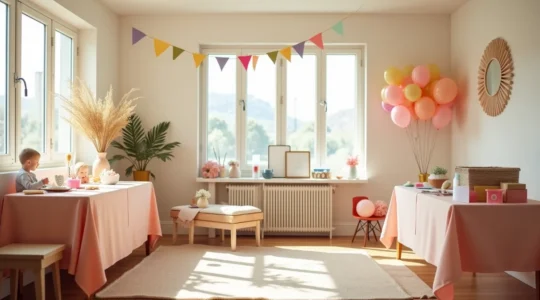
How to Plan a Stress-Free Birthday Party at Home?
In summary: Swap complex themes and gift pressure for simple, value-driven decision frameworks that reduce cost and stress. Strategically time…
Read more