
Contrary to popular belief, a resilient immune system isn’t built by avoiding germs, but by intelligently training it with a holistic approach.
- This involves embracing the “hygiene hypothesis,” understanding that managed exposure to diverse microbes is beneficial for immune education.
- It also means prioritizing the nutrient synergy from whole foods over isolated supplements to build a robust internal ecosystem.
Recommendation: Shift your focus from sterilization to cultivation: cultivate a diverse gut microbiome, a positive relationship with food, and an understanding of fever as a natural training tool.
The seemingly endless cycle of sniffles, coughs, and fevers that begins the moment your child enters daycare can be exhausting for any parent. You follow the standard advice: you encourage hand washing, you stock up on oranges for vitamin C, and you ensure they get to bed on time. Yet, the next “bug” always seems to be just around the corner. This constant battle can leave you feeling helpless, wondering if there’s a missing piece to the puzzle.
What if the secret to a stronger child wasn’t a more powerful shield against germs, but a smarter, more adaptable internal army? What if we could move beyond a defensive posture and actively *educate* our children’s immune systems? This is the core principle of a holistic, naturopathic approach. It’s about building resilience from the inside out by cultivating a robust internal ecosystem, rather than simply trying to sterilize the world around them. True strength lies not in avoiding challenges, but in learning how to overcome them effectively.
This guide will walk you through this paradigm shift. We will explore why overly clean environments can be counterproductive, how to nourish even the pickiest eaters with immune-supporting foods, and how to reframe our response to common illnesses like fever. By focusing on root causes and foundational health, you can empower your child’s body to build the intelligent, resilient defense system it was designed to have, well before the winter season arrives.
To navigate these holistic concepts, this article is structured to guide you step-by-step. The following summary outlines the key areas we will explore to build a comprehensive winter wellness plan for your child.
Summary: A Holistic Path to Child Immunity
- Why “Too Clean” Environments Can Actually Weaken Immunity?
- How to Incorporate Immune-Boosting Foods into a Picky Eater’s Diet?
- Vitamins vs. Whole Foods: Which Builds Better Defense?
- The Error of Treating Every Fever That Hinders Immune Learning
- When to Start the “Winter Wellness” Protocol for School Kids?
- Why “Go, Grow, Glow” Foods Is Better Than “Good vs Bad”?
- Why Uneven Terrain Is Better for Ankles Than Flat Playgrounds?
- How to Teach Kids About Protein and Carbs Without Diet Culture?
Why “Too Clean” Environments Can Actually Weaken Immunity?
The modern drive for hyper-sanitized environments is rooted in a misunderstanding of how our immune systems develop. We’ve been taught to view all microbes as enemies, but the “hygiene hypothesis” suggests the opposite: a lack of early childhood exposure to a diverse range of microorganisms can lead to an underdeveloped and poorly regulated immune system. An immune system that isn’t “trained” by encountering everyday bacteria, viruses, and allergens can become confused, overreacting to harmless substances and increasing the risk of allergies and autoimmune conditions.
Scientific evidence increasingly supports this idea of “immune education.” For example, the way a child is born has a significant impact. Studies show that being born by C-section is linked to a higher risk of allergies and asthma due to microbiome disruption during infancy, as the baby misses out on the foundational microbial bath of the vaginal canal. This initial seeding of the gut is a critical training event for the immune system.
This principle extends beyond birth. Research from the Canadian CHILD cohort study found that infants living with pets, particularly dogs, had a richer and more diverse gut microbiome. This diverse “internal ecosystem” is a cornerstone of a resilient immune system. Instead of aiming for sterility, our goal should be to foster a rich and diverse microbial environment. This means letting kids play in the dirt, interact with pets, and not panicking about every little germ. This managed exposure is not a failure of hygiene; it is a fundamental part of building a strong, intelligent, and balanced immune defense for life.
How to Incorporate Immune-Boosting Foods into a Picky Eater’s Diet?
Telling a parent to “feed their child a rainbow of vegetables” is simple in theory but often challenging in practice, especially with a picky eater. The key is to shift the dynamic from a battle of wills to a game of exploration. Pressure and rigid rules often create food aversions, whereas curiosity and play can open the door to new tastes and textures. The goal isn’t to force-feed broccoli but to make trying new, colorful foods a positive and low-stakes experience.
One of the most effective strategies is to remove the pressure of finishing a food. Instead, focus on tasting and describing. What does it feel like? Is it crunchy or soft? Sweet or savory? This reframes the interaction from a demand into a sensory exploration. You can make this even more engaging with creative, “stealth health” techniques. Smoothies become “Immunity Potions” where the child is the “scientist” adding ingredients, or you can blend nutrient-dense but neutral-tasting foods like white beans into a familiar tomato sauce for hidden zinc and fiber. Every small success builds momentum.
This approach emphasizes positive association over parental control. By empowering the child within a structured, playful framework, you help them build a healthier relationship with food that will last a lifetime.
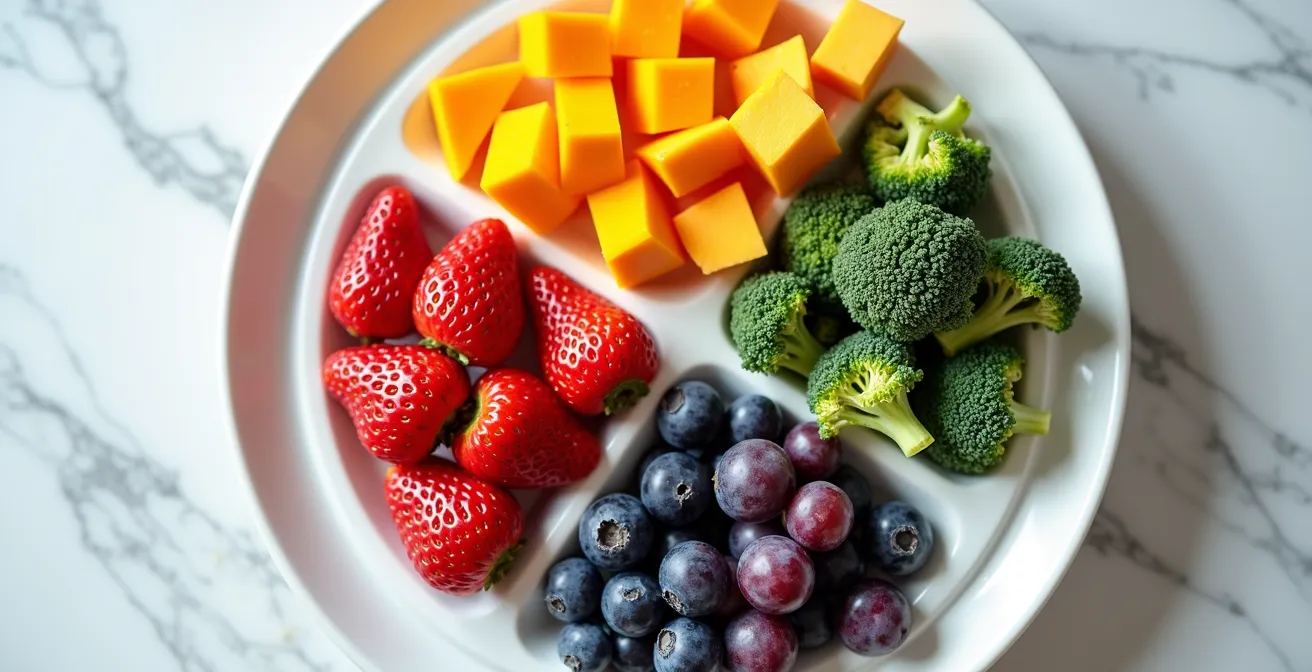
As the image above illustrates, a plate filled with a variety of colors is a plate filled with a variety of phytonutrients, each playing a unique role in supporting the immune system. The “Food Explorer Game” is a practical way to encourage your child to explore this nutritional diversity.
- Create a rainbow chart for the fridge where your child gets a sticker for trying a new food from each color group.
- Incorporate “hidden” nutrients, such as adding hemp or chia seeds to a favorite yogurt or using bone broth instead of water to cook rice and pasta.
- Focus on the act of tasting, not finishing the portion, to remove pressure and anxiety around mealtimes.
- Frame healthy drinks as exciting “Immunity Potions” and let the child participate in making them.
Vitamins vs. Whole Foods: Which Builds Better Defense?
In our quest for a quick fix, it’s tempting to rely on children’s multivitamins and supplements as an insurance policy. While targeted supplementation can be necessary in cases of diagnosed deficiency, it’s a mistake to believe it can replace the complex benefits of whole foods. A naturopathic perspective emphasizes that nutrients do not work in isolation. They operate in a complex, synergistic matrix that science is only beginning to understand. An orange, for example, offers not just Vitamin C, but also flavonoids, fiber, and hundreds of other phytonutrients that work together to enhance absorption and antioxidant activity in ways a simple ascorbic acid tablet cannot.
This concept of nutrient synergy is the cornerstone of a food-first approach. The fiber in an apple slows sugar absorption and feeds beneficial gut bacteria. The healthy fats in an avocado help the body absorb fat-soluble vitamins A, D, E, and K from other foods in the same meal. This intricate dance of compounds is something a processed supplement simply cannot replicate. Focusing on whole foods teaches the body to efficiently extract and utilize nutrients from a natural source, a vital skill for lifelong health.
As Dr. Elizabeth Lippner, a pediatrician at Lurie Children’s Hospital, wisely points out, a holistic approach is far more effective and sustainable.
Making sure your child gets nutrients through natural foods is better than costly supplements.
– Dr. Elizabeth Lippner, MD, Lurie Children’s Hospital
Ultimately, supplements should be seen as a targeted intervention, not a foundation. The real work of building a resilient immune system is done at the dinner table, with a diverse diet rich in colorful, unprocessed, whole foods. This approach provides the complete nutritional toolkit the body needs to build, repair, and defend itself.
The Error of Treating Every Fever That Hinders Immune Learning
One of the biggest paradigm shifts for parents is learning to see fever not as the enemy, but as a powerful and intelligent ally. Our first instinct is often to reach for a fever-reducer at the first sign of a rising temperature. However, this immediate intervention can short-circuit one of the body’s most effective defense mechanisms. A fever is a sign that the immune system is working exactly as it should be. The elevated body temperature creates an inhospitable environment for viruses and bacteria, slowing their replication while simultaneously accelerating the body’s immune response.
Compelling research shows the direct benefits of this heat response. A study published in the Journal of Pediatric Infection confirms that a body temperature of 38-39°C has a direct positive effect on the activation and proliferation of immune cells, including B-cells and T-cells. This process is most efficient at a high temperature of around 39.5°C (103.1°F). By suppressing fever unnecessarily, we are essentially telling the body’s “special forces” to stand down just as the battle is beginning. This is a critical moment of immune education, where the body learns to identify and create antibodies against a specific pathogen, building memory for future encounters.
Of course, comfort and safety are paramount. A fever that is excessively high (e.g., over 40°C or 104°F), prolonged, or accompanied by other worrying symptoms like lethargy or difficulty breathing always warrants medical attention. However, for a low-to-moderate fever in an otherwise well-hydrated and relatively comfortable child, the best approach is often watchful waiting. Supporting the body with fluids, rest, and light nutrition allows the immune system to do its job, learn its lesson, and emerge stronger and smarter than before. Recent studies are even helping scientists pinpoint subtle changes in how the immune system responds during these febrile events, confirming it’s an active learning process.
When to Start the “Winter Wellness” Protocol for School Kids?
Building true immune resilience isn’t a last-minute scramble when the first cough appears; it’s a gradual, proactive process. The ideal time to begin a “Winter Wellness” protocol is not in the dead of winter, but in early autumn. Starting around the autumnal equinox (late September) allows you several weeks to fortify your child’s internal ecosystem before the peak of cold and flu season, which often coincides with the increased indoor time and germ exchange of the school year.
This ramp-up period should focus on solidifying the foundational pillars of health: sleep, nutrition, and gut support. Sleep is when the body performs critical repair and immune cell production; consistent routines are non-negotiable. Nutritionally, this is the time to introduce more vitamin C-rich foods and ensure gut health is a priority, as a huge portion of the immune system resides in the gut. For those living in northern latitudes, this is also the critical window to assess Vitamin D levels, as decreasing daylight leads to a natural drop in this crucial immune-modulating hormone. Supplementation may be necessary and should be discussed with your healthcare provider.
Think of it as training for a marathon, not a sprint. A slow and steady build-up creates lasting strength and ensures your child’s immune system is well-equipped and ready for the challenges ahead.

This period of preparation is about more than just food; it’s about a lifestyle that embraces the changing seasons. The following plan provides a clear, step-by-step approach to begin this process.
Your 4-Week Winter Wellness Ramp-Up Plan
- Week 1: Solidify the Sleep Schedule. Establish a consistent bedtime and wake-up time, aiming for 10-12 hours of quality sleep per night for young children. A predictable routine signals safety to the nervous system, which is crucial for immune function.
- Week 2: Introduce One Immune-Boosting Meal Daily. Focus on incorporating one smoothie or meal rich in Vitamin C (berries, citrus, bell peppers) and zinc each day. Make it a fun, consistent part of the routine.
- Week 3: Focus on Gut Health. Add a daily source of probiotics, such as plain yogurt, kefir, or other fermented foods. This directly supports the gut microbiome, the command center of the immune system.
- Week 4: Ensure Adequate Vitamin D. As sunlight wanes, especially in northern latitudes, consider having levels checked and discuss potential supplementation with your pediatrician or naturopathic doctor.
- Timing is Key: Start this protocol in late September or early October to have these habits firmly in place before the winter germ exchange truly peaks.
Why “Go, Grow, Glow” Foods Is Better Than “Good vs Bad”?
The language we use around food has a profound impact on our children’s long-term relationship with eating and their bodies. Labeling foods as “good” or “bad” (or “healthy” vs. “junk”) creates a moral framework that can lead to guilt, shame, and a “forbidden fruit” effect, where restricted foods become more desirable. This black-and-white thinking fails to teach children the most important lesson: what food *does* for their bodies. It sets up a dynamic of restriction and reward, not of nourishment and empowerment.
A far more constructive and empowering approach is the “Go, Grow, and Glow” framework. This functional model categorizes foods by their primary role in the body, free from judgment.
- Go Foods (Carbohydrates): These are the body’s primary source of energy. They give you the fuel to run, play, and think.
- Grow Foods (Proteins): These are the building blocks for the body. They help you grow strong muscles, repair tissues, and build the “army” of the immune system (like antibodies).
- Glow Foods (Vitamins & Minerals from fruits/veggies): These foods help your skin glow, your eyes see clearly, and your immune system fight off germs. They are the body’s protective shield.
This language transforms the conversation. A cookie isn’t “bad”; it’s a “Go” food that provides quick energy, but we also need “Grow” and “Glow” foods to be strong and healthy. It teaches balance and informed choice rather than restriction and guilt. This functional understanding empowers children to see food as a tool for building a strong, capable body.
| Approach | ‘Good vs Bad’ Framework | ‘Go, Grow, Glow’ Framework |
|---|---|---|
| Language Type | Moral/judgmental | Functional/educational |
| Child’s Response | Guilt, shame, forbidden fruit effect | Empowerment, informed choice |
| Internal Dialogue | ‘I was bad for eating that’ | ‘My body needs this to be strong’ |
| Treats Handling | Creates restriction and desire | Incorporates as ‘Go’ foods for quick energy |
| Immunity Connection | No clear link | Go = fuel for immune cells, Grow = antibody building blocks, Glow = protective shield |
Why Uneven Terrain Is Better for Ankles Than Flat Playgrounds?
Just as the immune system needs diverse microbial input, the musculoskeletal system needs diverse physical input. Modern playgrounds, with their flat, rubberized surfaces, are designed for safety but inadvertently rob children of a critical developmental experience: navigating uneven terrain. Walking, running, and climbing on natural, varied surfaces like grassy hills, forest floors, and rocky paths is a form of “physical education” for the ankles, knees, and hips.
This process is governed by proprioception—the body’s ability to sense its position in space. When a child steps on a wobbly stone or an angled tree root, thousands of nerves in their feet and ankles send rapid-fire signals to the brain. In response, the brain directs tiny, instantaneous adjustments in the surrounding muscles to maintain balance. This constant feedback loop strengthens the muscles, ligaments, and neural pathways responsible for stability. A child who only walks on flat surfaces has a “less educated” proprioceptive system, making them more prone to sprains and instability when they do encounter an unexpected bump.
Beyond the physical benefits, spending time in nature has a direct, measurable impact on the immune system. The practice of “forest bathing” (mindfully spending time in a forest) has been shown to increase the activity of Natural Killer (NK) cells, a type of white blood cell that is crucial for fighting viruses. When possible, daily outdoor play on natural ground is ideal. But you can also bring this principle indoors:
- Build indoor obstacle courses with pillows and cushions.
- Create “texture paths” with different rugs and mats for barefoot walking.
- Use balance boards and wobble cushions while watching a show.
- Practice climbing on structures with varied grip positions.
These activities provide the diverse sensory input that builds both a physically and immunologically resilient child.
Key Takeaways
- Immunity is Learned, Not Given: Shift from a mindset of “protecting” your child from all germs to one of “training” their immune system through managed, diverse exposures.
- Food is Functional Information: Move away from “good vs. bad” labels and teach your child what food *does* for their body using the “Go, Grow, Glow” model to foster empowerment.
- The Body is a Holistic Ecosystem: True resilience comes from supporting the entire system—gut health, sleep, movement, and emotional well-being—not from isolated supplements or quick fixes.
How to Teach Kids About Protein and Carbs Without Diet Culture?
The “Go, Grow, Glow” framework is the perfect entry point for teaching children about macronutrients—protein and carbohydrates—without the toxic baggage of diet culture. The goal is not to talk about calories, weight, or restriction, but to continue the functional narrative. These nutrients are simply the specific tools the body uses to achieve its “Go” and “Grow” missions. By using simple, powerful analogies, you can build a foundation of nutritional wisdom that will serve them for life.
Explain protein by calling it “body LEGOs.” As registered dietitian Julia Zumpano notes, zinc, a critical mineral for immunity, is often found in protein-rich foods. She says, “Oysters, red meat and poultry are some of the best sources. Beans and nuts are also a good source of zinc.” You can tell your child that these foods provide the special LEGO blocks needed to build everything from strong muscles for playing to the “special agent” antibodies that fight off germs.
For carbohydrates, use a fuel analogy. Simple carbs found in fruit or a little honey are “rocket fuel”—perfect for a quick burst of energy before a race. Complex carbs, like those in oatmeal or brown rice, are “long-lasting fuel” that acts like the diesel in a big truck, providing steady energy to keep them playing all afternoon. This teaches them to connect how they feel and perform with what they eat. A balanced meal, then, isn’t about rules; it’s about building a “Meal Team” where the Protein “Builder,” the Carb “Energizer,” and the colorful “Glow” Protector all work together to help them be their best.
By adopting this holistic, educational approach, you are doing more than just helping your child get through the winter with fewer colds. You are giving them the invaluable gift of body literacy and empowering them to become active participants in their own lifelong health and well-being. Start today by choosing one small shift—whether it’s reframing fever, playing the “rainbow game,” or building a pillow obstacle course—and begin cultivating that resilient internal ecosystem.
Frequently Asked Questions About Boosting a Child’s Immunity
How do I explain protein to my child without mentioning weight?
Use the analogy that protein is like LEGO blocks that build and repair everything in your body. It builds strong muscles for running and playing, and it also builds the special agents (antibodies) that are part of your immune system’s army to fight germs.
What’s the difference between ‘fast fuel’ and ‘long-lasting fuel’ for kids?
Explain that simple carbs (like those in fruit or honey) are ‘rocket fuel’ that give you a quick burst of energy for a race. Complex carbs (found in oats, brown rice, or whole-wheat bread) are ‘long-lasting fuel,’ like the diesel in a truck, that keeps your body and brain going strong all afternoon.
How can I teach balanced meals without diet culture?
Use the concept of a ‘Meal Team’. Every great meal has a team working together: a Protein ‘Builder’ to make you strong, a Carb ‘Energizer’ to give you fuel to play, and a colorful fruit or vegetable ‘Protector’ to keep your body safe from germs.