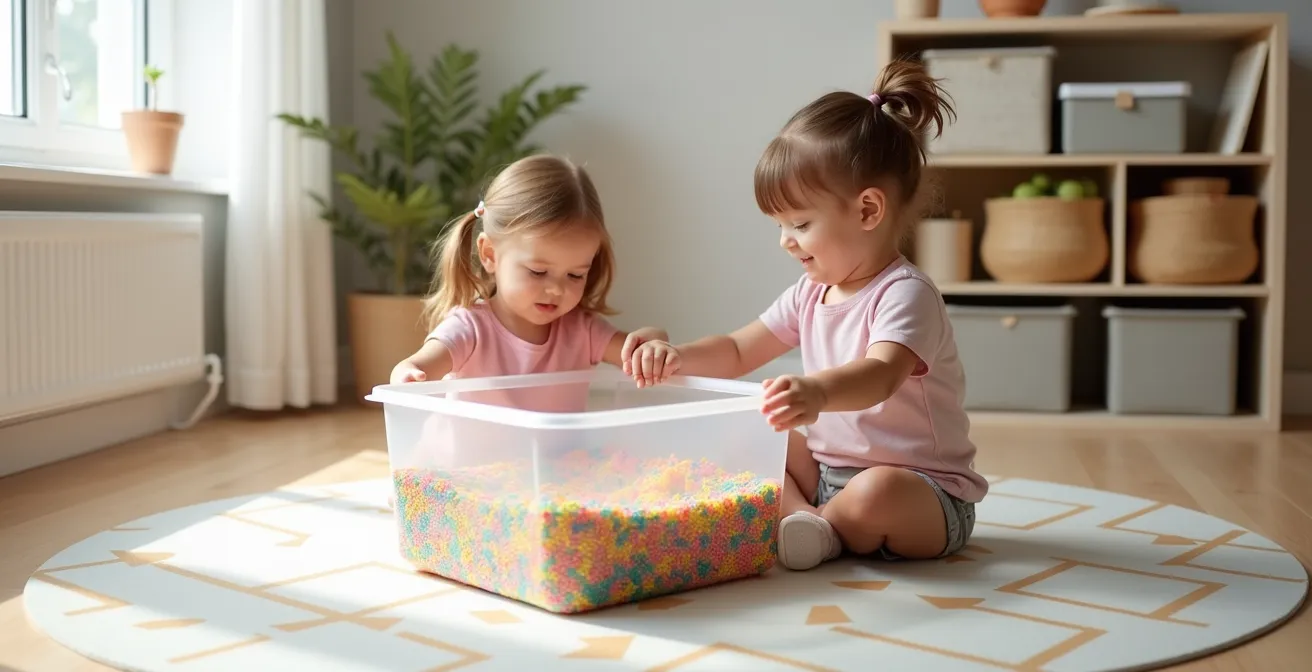
The fear of a monumental mess stops many parents from using sensory bins, but the key isn’t avoiding mess—it’s engineering it for quick and easy containment.
- Sensory play is a non-negotiable tool for developing crucial pre-writing skills and emotional regulation.
- Strategic choices in fillers, location, and tools can transform cleanup from a dreaded chore into a predictable, five-minute task.
Recommendation: Instead of banning messy play, implement a “containment strategy” by using a large mat and a dedicated cleanup kit, turning the entire process into a positive learning experience.
You’ve seen them on social media: perfectly curated sensory bins with rainbow-colored rice and smiling, tidy children. Then you remember the reality—the time you tried it and spent the next hour vacuuming beans out of the carpet. For many parents, the dread of cleanup far outweighs the perceived benefits of messy play, leading them to avoid it altogether. The common advice, “just put down a towel,” often feels laughably inadequate in the face of a determined toddler. You know tactile play is probably important, but the sheer effort of containing the chaos is overwhelming.
But what if the goal was never to prevent mess entirely? What if, instead, the secret was to manage it so effectively that cleanup becomes a non-issue? The true obstacle isn’t the mess itself, but our lack of a system to control it. This is where a shift in perspective is needed: from mess avoidance to mess engineering. By being strategic about your setup, fillers, and cleanup routine, you can provide this critical developmental activity without sacrificing your sanity or your floors. This approach transforms a parental burden into a predictable, manageable, and even educational part of the activity.
This guide will walk you through the non-negotiable reasons why tactile play is essential for your child’s brain. We’ll then dive into the practical “how,” exploring safe fillers for different ages, a system for containing the chaos, and the simple steps to make cleanup a skill your child learns. Prepare to move from a state of mess-induced anxiety to one of unbothered, practical confidence.
This article provides a structured path to reclaiming messy play. Explore the sections below to understand the developmental importance, discover practical ideas, and master the art of mess containment.
Summary: Sensory Bins Without the Stress
- Why Tactile Stimulation Is Critical for Pre-Writing Skills?
- Sensory Bin Ideas: 5 Safe Fillers for Babies Under 12 Months
- Water Play vs. Rice Bins: Which Is More Calming for High Energy?
- The Mistake of Forcing Texture Play on Sensitive Children
- When to Transition from Messy Play to Cleanup Routine?
- Why “Too Clean” Environments Can Actually Weaken Immunity?
- How to Build a “Loose Parts” Kit from Household Items?
- How to Spot Gross Motor Delays in Children Under 5?
Why Tactile Stimulation Is Critical for Pre-Writing Skills?
The journey to holding a pencil and writing letters doesn’t start with worksheets; it begins with hands plunged in sand, rice, or slime. Tactile stimulation through sensory play is the direct precursor to developing the fine motor skills necessary for writing. Activities like scooping, pouring, and pinching small objects in a sensory bin build hand strength, develop the pincer grasp, and improve hand-eye coordination. These are the foundational muscles and skills that will later enable a child to control a crayon, use scissors, and form letters with confidence.
Pre-writing skills aren’t just about strength; they’re about sensory feedback. The resistance of playdough, the feel of individual rice grains, or the slipperiness of water teaches a child’s brain how to modulate pressure and movement. This rich sensory information builds neural pathways that are essential for tasks requiring dexterity. While studies show variations in development, the principle remains universal: practice strengthens performance. For instance, a 2023 study involving over 3,000 children highlighted that fine motor skills can differ, emphasizing the need for ample opportunities for all children to engage in foundational practice.
To actively foster these abilities, you can introduce a progression of challenges within the sensory bin. Start with large, easy-to-grab items and gradually move to smaller, more complex tasks. This method ensures the child is constantly engaged but never overly frustrated.
- Practice drawing lines and shapes in a shallow layer of rice, sand, or shaving cream.
- Use playdough to roll snakes, balls, and eventually form letters.
- Provide broken crayons for drawing, which naturally encourages a proper tripod grasp.
- String large beads onto a shoelace or pipe cleaner to develop bilateral coordination.
- Rip paper for crafts or practice opening and closing marker caps and glue sticks.
Ultimately, a sensory bin is a gym for the hands. It provides a playful, low-stakes environment where a child can complete the thousands of repetitions needed to master the fine motor control that makes writing possible.
Sensory Bin Ideas: 5 Safe Fillers for Babies Under 12 Months
Introducing sensory bins to babies under one year old requires a shift in focus towards taste-safe materials. At this age, everything ends up in the mouth, so your primary concern is safety. While some experts advise that sensory bins are most appropriate for children over 18 months, as the benefits might not outweigh the hazards before then, many parents choose to introduce them earlier with strict supervision and carefully selected fillers. If you decide to proceed, the rule is simple: don’t put anything in the bin that you wouldn’t be comfortable with your baby ingesting in small amounts.
Forget tiny plastic beads or dry beans; your best options are edible. This doesn’t mean preparing a meal in a bin, but rather using food-based items that are safe if mouthed or swallowed. This approach allows for oral exploration, which is a key part of how babies learn about their world.
Here are five taste-safe sensory bin filler ideas suitable for babies under 12 months, always under direct supervision:
- Puffed Cereals: Use large, easy-to-grab puffed grain cereals (like oat or rice puffs). They provide a great texture, are easy to clean up, and are perfectly safe if some are eaten.
- Cooked Oatmeal: A cooled, thick oatmeal provides a wonderfully gooey, messy experience. It’s fantastic for learning about cause and effect as they squish and smear it.
- Yogurt with Food Coloring: Plain, unsweetened yogurt can be colored with a drop of natural food coloring for a vibrant “paint.” It’s a cool, smooth texture that’s completely edible.
- Large, Soft-Cooked Pasta: Use large pasta shapes like rigatoni or shells, cooked until soft. They are easy for little hands to pick up and have a unique, squishy texture.
- Water with Large Fruit Slices: A shallow bin with an inch of water and large, sturdy slices of lemon or orange offers a multi-sensory experience: sight, smell, and touch. Ensure the fruit pieces are too large to be a choking hazard.
When working with this age group, always check for choking hazards. A good rule of thumb is to use a choke test tube; if an object fits inside, it’s too small for unsupervised play with a baby. By choosing edible bases, you can confidently let your little one explore without the constant worry.
Water Play vs. Rice Bins: Which Is More Calming for High Energy?
When a child is buzzing with excess energy, a sensory bin can be a powerful tool to help them self-regulate, but the choice of filler is critical. The two most common options, water and rice, offer vastly different sensory inputs and are suited for different regulatory needs. Understanding this difference is key to using them effectively. Water provides a light tactile input, while rice offers deep pressure, and this distinction determines their calming effect.
Water play is often stimulating. The splashing, pouring, and unpredictable nature of liquid can be an excellent outlet for a child who needs to release physical energy. Cool water can be alerting and invigorating, while warm water tends to be more regulating and calming. However, for a child who is already overstimulated, the open-ended nature of water play can sometimes escalate the chaos rather than soothe it.
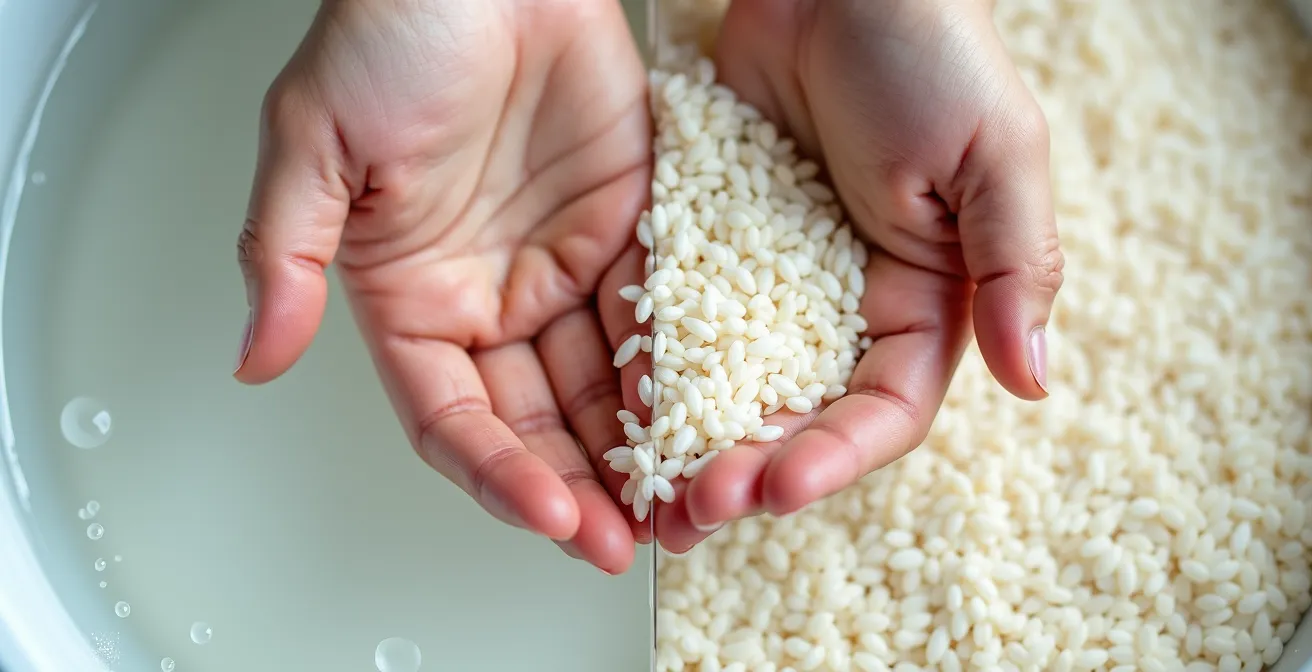
Rice bins, on the other hand, provide what is known as proprioceptive input—the awareness of one’s body in space. The weight and pressure of the rice as a child digs their hands in has a grounding and organizing effect on the nervous system. The consistent sound and feel of the rice running through their fingers is repetitive and predictable, which can be intensely calming for a child who feels disorganized or hyperactive. As one expert from the Cleveland Clinic notes, sensory play is versatile. M.Ed., an education expert, states in Cleveland Clinic Health Essentials, “Sensory play can be used to help regulate your overall arousal level. You can use it to stimulate a child who might be a little sluggish. On the other end, sensory play can help a child who might have hyperactivity or trouble paying attention”. The following table breaks down the core differences:
| Aspect | Water Play | Rice Bins |
|---|---|---|
| Sensory Input Type | Lighter tactile and temperature input | Deep pressure proprioceptive input |
| Calming Effect | Warm water is regulating and calming | Provides grounding sensation |
| Best For | Children needing stimulation outlet | Children needing to be grounded |
| Temperature Options | Cool water for alerting, warm for calming | Room temperature offers neutral sensation |
There is no single “better” option; the right choice depends on the child’s specific needs in that moment. If the goal is to provide a physical outlet, water is a great choice. If the goal is to calm an overstimulated mind and body, the deep pressure of a rice bin is often more effective.
The Mistake of Forcing Texture Play on Sensitive Children
For a child with sensory sensitivities, being forced to touch a texture that feels overwhelming—like sticky slime or gooey mud—can be as aversive as a loud siren or a flashing strobe light. A common mistake well-meaning parents make is pushing a child into full-contact messy play, believing that immersion will “cure” their sensitivity. This approach often backfires, creating a negative association with sensory activities and potentially causing sensory overload, which can lead to meltdowns and a complete refusal to participate in the future.
Children with sensitivities, including many on the autism spectrum, benefit immensely from sensory play, but the introduction must be gradual and on their terms. The goal is not to force tolerance but to gently expand their window of comfort. These children are not being “picky”; their brains are processing sensory information differently, and certain textures can be genuinely painful or distressing. The key is to find a balance between stimulating and calming activities, introducing new experiences slowly and always observing the child’s cues.
Case Study: Gradual Sensory Exposure
Some children have sensory sensitivities where certain textures, sounds, or lights might be overwhelming. For these children, the right kind of sensory play can be especially beneficial. A gradual approach helps them become more comfortable with different sensory inputs over time, transforming a source of anxiety into a tool for regulation and exploration. Instead of avoiding textures, the focus is on introducing them in a controlled, safe, and respectful manner.
A “Texture Gradient” approach is highly effective. This involves starting with the least threatening form of interaction and slowly moving towards more direct contact, allowing the child to lead the way and stop at any point. This respects their boundaries while still encouraging exploration.
- Start with Barrier-Based Play: The child interacts with the texture through a protective layer. This can be a sealed ziplock bag filled with paint or gel (a “squish bag”) or a clear container they can look through and manipulate without touching the contents.
- Introduce “Body Extenders”: Provide tools that allow the child to interact with the texture without direct skin contact. This includes long-handled spoons, paintbrushes, shovels, or tongs. They can poke, stir, and move the material from a safe distance.
- Progress to Tolerated Direct Contact: Once comfortable with tools, you can encourage brief, direct contact. This might start with just a fingertip, then a whole hand. Always use textures you know they already tolerate or prefer, and introduce new, more challenging textures in tiny, optional amounts.
By honoring a child’s sensory system and giving them control over the interaction, you build trust. This empowers them to explore new textures at their own pace, turning a potential battleground into a successful and positive experience.
When to Transition from Messy Play to Cleanup Routine?
The transition from play to cleanup is often where things fall apart. The fun is over, and now a tired parent is left with a mountain of mess while the child has moved on. However, the most effective approach is to reframe cleanup not as the *end* of the fun, but as the final, non-negotiable step of the activity. The transition should begin the moment you notice the child’s engagement starting to wane, not after they’ve already disengaged and left the area.
Parents often feel the same frustration, as one shared: “I tried a sensory bin with my kids… They are having a blast…but the beans/rice are ending up all over the place. I feel like I’m going to spend as much time cleaning up as they are entertained”. This is a universal pain point, but it can be solved by integrating the cleanup into the playtime itself. Giving a five-minute warning using a visual timer (like a sand timer) provides a concrete, predictable signal that the activity is winding down. This is far more effective than verbal warnings that can be easily ignored.
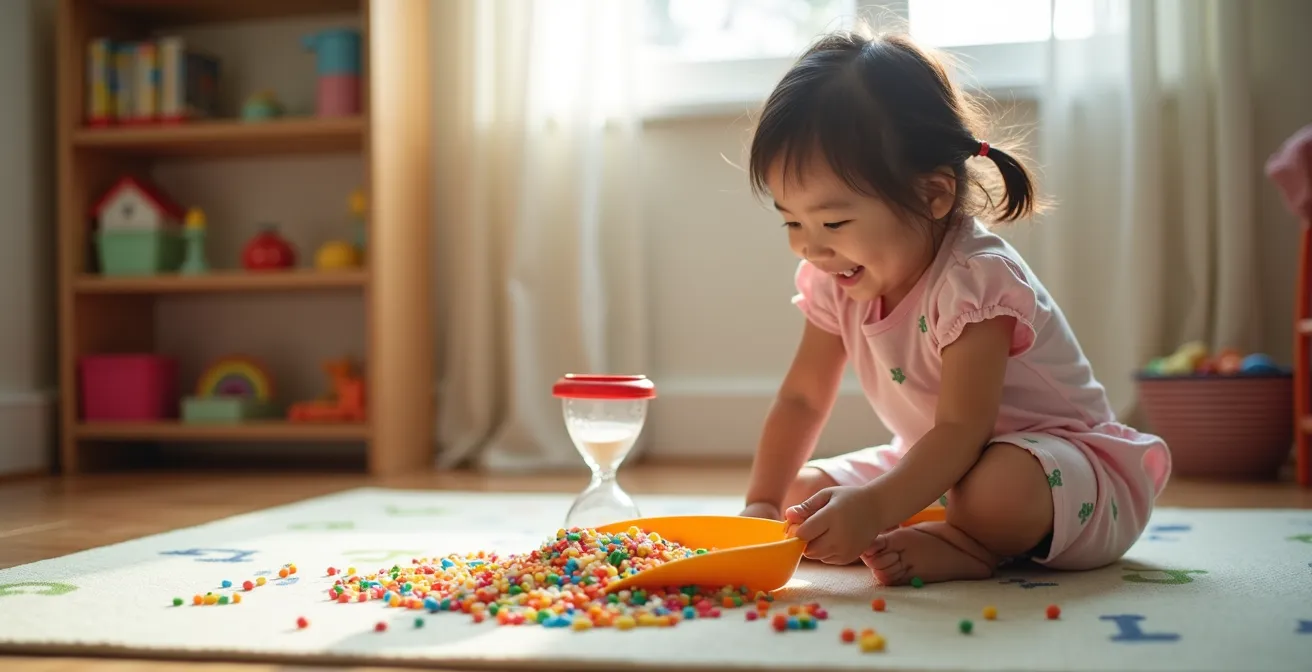
The key to a painless transition is preparation. Your “mess engineering” strategy should include a dedicated, easily accessible cleanup kit. This makes the process fast and empowers the child to participate, turning a chore into a game of “helping.” A child as young as two can learn to use a small dustpan or wipe up spills with a sponge.
Your 5-Minute Mess Containment Checklist
- Establish a “Mess Zone”: Place your sensory bin on a large, wipeable splat mat or an old sheet. This defines the play area and makes gathering stray fillers as simple as picking up the corners of the sheet.
- Provide Child-Sized Tools: Include a small dustpan, a hand broom, and a “filler sponge” (a dry sponge for picking up grains like rice) as part of the play kit. They are tools, not just for cleanup.
- Use Visual Timers: Introduce a sand timer or visual clock when there are 5 minutes of playtime left. This makes the transition predictable and less abrupt.
- Keep a “Lost and Found” Box: Have a small, dedicated box next to the play area for small pieces found later while vacuuming or sweeping. This avoids interrupting the main cleanup flow.
- Incorporate Water for Quick Wipes: Keep a small water spray bottle and a cloth handy. A quick spray and wipe is often all that’s needed for sticky hands or small spills on a mat.
By making cleanup an expected and collaborative part of the sensory bin experience, you teach valuable life skills about responsibility and completing a cycle of activity. It shifts the burden from being solely on the parent to being a shared task, which is the ultimate secret to unbothered, sustainable messy play.
Why “Too Clean” Environments Can Actually Weaken Immunity?
In our quest to protect our children, we’ve created a world of antibacterial wipes, hand sanitizers, and sterile play surfaces. Yet, this hyper-cleanliness may be a double-edged sword. The “hygiene hypothesis” suggests that a lack of early childhood exposure to everyday germs, bacteria, and microbes can lead to a weaker, improperly trained immune system. An immune system that isn’t challenged in early life can become overreactive, increasing the risk of allergies, asthma, and autoimmune disorders.
The data is compelling. According to research highlighted by Britannica, exposure to a diverse range of pathogens early in life is critical for developing a robust immune response. This doesn’t mean encouraging children to play in hazardous waste; it means allowing them to get dirty. Playing in the garden, making mud pies, and interacting with pets exposes a child’s immune system to a wide variety of harmless microorganisms. This exposure acts like a training program, teaching the immune system to distinguish between genuine threats and benign environmental substances.
The Finnish Forest Floor Trial
A groundbreaking Finnish trial vividly illustrated this principle. Researchers replaced the sterile gravel of urban daycare playgrounds with forest floor dirt, rich in natural microbes. Within just one month, the city children playing in the dirt showed a significantly more diverse collection of harmless bacteria on their skin. More importantly, they had more immune-regulatory T-cells in their blood compared to their peers on gravel playgrounds. This demonstrated that a simple change in environment could rapidly and positively mature a child’s immune system, making it less prone to overreaction.
The fear of germs has led to environments so sanitized that our children’s immune systems are left without a proper education. The consequences are significant, with some studies showing that children in highly sanitized urban environments can be up to 50% more likely to develop conditions like asthma and food allergies. Embracing a bit of mess and dirt isn’t about being neglectful; it’s about providing a biologically necessary input for a healthy, balanced immune system. Letting them splash in a puddle or dig in the mud isn’t just fun—it’s a science-backed health benefit.
So, the next time your child comes inside covered in dirt from their sensory play, remember that this “mess” is actually a dose of preventative medicine. It’s building a stronger, more resilient foundation for their lifelong health.
How to Build a “Loose Parts” Kit from Household Items?
“Loose parts” are the secret ingredient to unlocking endless creativity in sensory play. They are simply open-ended, non-prescriptive materials that children can move, combine, redesign, and imagine in countless ways. Unlike a toy car, which is always a car, a bottle cap can be a coin, a plate, a wheel, or a hat. Building a loose parts kit doesn’t require a trip to the store; your home is already a treasure trove of materials waiting to be discovered.
The beauty of loose parts is that they encourage divergent thinking and problem-solving. When presented with a collection of varied items, a child isn’t given a script. They must invent the narrative, engineer the structure, and create the meaning. This process is far more cognitively demanding and rewarding than following instructions. You can start by gathering items from your recycling bin, junk drawer, and craft supplies.
A helpful way to think about collecting items is the T.R.E.A.S.U.R.E. framework, which ensures a variety of textures and shapes to spark creativity. Sort these items into a tackle box or egg carton to keep them organized and visually appealing.
- Textures: Collect fabric scraps, felt pieces, and ribbons.
- Rollers: Save paper towel tubes and toilet paper rolls.
- Enclosures: Gather jar lids, small boxes, and plastic containers.
- Architectural: Keep interesting cardboard pieces and wooden blocks.
- Shiny: Add bits of aluminum foil or metallic paper.
- Unusual: Include old (and clean) keys, large buttons, or sea shells.
- Rigid-Connectors: For older children, add clothespins or paper clips.
Safety is the primary consideration when building your kit, especially for toddlers and preschoolers. Always supervise play and be vigilant about choking hazards. Use a choke tube tester to check any small items—if it fits, it’s not safe for unsupervised play with young children. The goal is to create a rich, stimulating collection that invites exploration, but it must always be curated with the child’s age and developmental stage in mind.
Key Takeaways
- Tactile play is not just fun; it’s a non-negotiable prerequisite for developing the fine motor skills needed for writing.
- “Mess engineering”—using strategic fillers, mats, and tools—is the key to containing sensory play, not avoiding it.
- Integrating cleanup as the final, collaborative step of the activity teaches responsibility and dramatically reduces the parental workload.
How to Spot Gross Motor Delays in Children Under 5?
While sensory bins are famous for honing fine motor skills, they also provide a perfect stage for observing gross motor development. Gross motor skills involve the large muscles of the body used for walking, balancing, and core stability. The simple act of carrying a bin, squatting to play, or standing on one leg to reach for a toy reveals a great deal about a child’s physical development. Paying attention during these play sessions can help you spot potential delays early.
Developmental milestones provide a general guide, but every child progresses at their own pace. However, consistent difficulty with age-appropriate tasks can be a sign to consult a pediatrician or occupational therapist. Sensory play offers a low-pressure environment to observe these skills in action. Does your child seem unusually clumsy? Do they avoid activities that challenge their balance? Do they struggle to maintain a posture while playing?
These are not questions for a formal examination, but for gentle, mindful observation during everyday play. A sensory bin activity naturally incorporates many of these movements. For instance, a child needs core strength to squat and play for an extended period, coordination to pour from a container without losing balance, and stability to carry a bin filled with materials.
Here is a simple observational checklist of gross motor skills you can watch for during sensory play with children under five:
- By Age 2: Can the child carry a small, light container with two hands from one spot to another without frequently falling?
- By Age 3: Can the child squat down to play and then stand back up easily, without needing to use their hands for support?
- By Age 4: Can the child stand on one leg for a few seconds? When pouring, do they show good coordination and stability, or do they often lose their balance?
- By Age 5: Can the child easily alternate between different positions (sitting, squatting, standing) during play? Is hand dominance for fine motor tasks clearly established, indicating brain lateralization?
Spotting a potential delay is not a cause for panic, but a prompt for conversation. Early identification and intervention are key. By using playtime as an opportunity for gentle observation, you empower yourself to be a more effective advocate for your child’s developmental journey.
Your role is not to be a diagnostician but a mindful observer. Armed with the right strategies for mess management and a clear understanding of the benefits, you can confidently reintroduce sensory play. Start small, embrace the controlled chaos, and watch your child thrive.
Frequently Asked Questions About Sensory Bins
What age is appropriate for sensory bins?
According to guidance from health experts, sensory bins are generally considered developmentally appropriate for children over 18 months of age. Before this, the potential hazards (like choking) can outweigh the benefits. For younger infants, any sensory play must be strictly supervised with only taste-safe, age-appropriate materials.
What materials should be avoided in sensory bins?
Certain common items are dangerous. Raw kidney beans are toxic if ingested and can cause severe illness. Flour poses an aspiration risk if inhaled. Unsterilized sand can contain harmful bacteria. Styrofoam peanuts and similar small, lightweight objects are significant choking hazards.
How do I test if an object is a choking hazard?
The standard method is to use a choke test tube or a small parts cylinder, which is designed to be the approximate size of a young child’s throat. Any object that can fit completely inside the tube, particularly if it’s round or elliptical, should be considered a choking hazard for children under three.
How can I effectively organize loose parts?
To prevent overwhelm and spark creativity, sort loose parts by type. Tackle boxes with multiple compartments, egg cartons, or sectioned craft trays are excellent for this. This organization makes the items more inviting and helps children see the creative potential of each piece.