
Contrary to popular belief, teaching kids about nutrition isn’t about creating lists of ‘good’ and ‘bad’ foods. The key is to shift the conversation from food morality to food functionality. This guide shows you how to use neutral language and body-positive frameworks to help your children build a healthy, trusting, and lifelong relationship with all foods, dismantling the guilt and anxiety that diet culture creates.
As a parent, you navigate a difficult tightrope. You want your children to be healthy, energetic, and nourished. Yet, you’re acutely aware of the pervasive influence of diet culture, a world that assigns moral value to food and promotes a narrow, often unattainable, body ideal. The fear is palpable: in trying to teach them about protein and carbohydrates, will you inadvertently plant the seeds of food anxiety, guilt, or even a future eating disorder? Many well-intentioned parents fall into the trap of using labels like “good,” “bad,” “healthy,” or “junk,” believing it’s the simplest way to guide their children’s choices.
The constant worry about growth charts and whether they’re eating “enough” of the right things can create a stressful mealtime environment for everyone. This pressure, combined with the alarming statistic that 1 in 4 children has engaged in dieting behavior by age 7, highlights the urgent need for a different approach. The traditional methods are clearly not just ineffective; they are potentially harmful.
But what if the solution wasn’t to double down on rules, but to change the entire conversation? What if, instead of teaching kids *what* to eat, we focused on teaching them *how* to think about and relate to food? This article is your guide to doing just that. We will dismantle the “good vs. bad” food binary and replace it with a more empowering and resilient framework built on food neutrality and body trust. You’ll learn practical strategies to talk about protein and carbs in a way that builds knowledge without creating fear, fostering a generation that is truly nourished, both in body and mind.
This article will walk you through a series of practical, evidence-based strategies to reframe your family’s approach to nutrition. Explore the topics below to build a foundation of food positivity at home.
Summary: Navigating Kids’ Nutrition Beyond Diet Culture
- Why “Go, Grow, Glow” Foods Is Better Than “Good vs Bad”?
- How to Use the “Hand Method” for Portion Control?
- Total Ban vs. Moderation: Which Prevents Sugar Binging?
- The Risk of Labeling Foods “Junk” That Creates Guilt
- School Lunch: How to Guide Kids to Pack Their Own Balanced Box?
- The Risk of Obsessing Over Growth That Leads to Feeding Anxiety
- How to Incorporate Immune-Boosting Foods into a Picky Eater’s Diet?
- How to Keep Teenagers at the Dinner Table for More Than 10 Minutes?
Why “Go, Grow, Glow” Foods Is Better Than “Good vs Bad”?
The first step in dismantling diet culture at home is to fundamentally change the language we use. The “good food” vs. “bad food” dichotomy is a trap; it assigns moral value to eating and teaches children that they are “good” for eating a salad and “bad” for enjoying a cookie. This way of thinking is the bedrock of food guilt and shame. A far more constructive framework is categorizing foods by their function in the body. The “Go, Grow, and Glow” model is an excellent, child-friendly way to do this.
This approach teaches food neutrality by explaining what different foods *do* for us.
- Go Foods (Carbohydrates): These are the body’s primary energy source. Think of them as the fuel that helps kids run, play, and think. This category includes bread, pasta, rice, and fruits. Instead of “sugar is bad,” we can say, “Sugar gives us quick energy, like a firework burst!”
- Grow Foods (Protein): These are the building blocks for a strong body. They help build muscles, bones, and everything in between. This includes meat, fish, beans, and dairy.
- Glow Foods (Vitamins and Minerals): These foods are packed with “superpowers” that help our bodies work their best. They support our immune system, help us heal, and make our skin and hair healthy. This is where colorful vegetables and fruits shine. We can say, “Vegetables have different vitamins that help our bodies glow.”
This model shifts the focus from restriction to function, empowering kids with knowledge instead of fear.
By explaining that all foods have a purpose—whether it’s for energy, growth, or even celebration and joy—we remove the morality and lay the foundation for a healthy, lifelong relationship with eating.
How to Use the “Hand Method” for Portion Control?
Once we’ve established a neutral language for food, the next question is often about quantity. The concept of “portion control” can be fraught with diet-culture baggage, suggesting restriction and external rules. However, we can reframe it as a tool for teaching body trust and awareness. The “Hand Method” is a simple, personalized, and visual way to guide children on portion sizes without resorting to measuring cups or scales. The beauty of this method is that the guide—their own hand—grows with them.
The principle, recommended by institutions like Nationwide Children’s Hospital, is to use the child’s hand as a rough guide. This ensures portions are appropriate for their individual size and needs.
- A serving of protein (Grow food) is about the size of their palm.
- A serving of carbohydrates (Go food) is what fits in their cupped hand.
- A serving of vegetables or fruit (Glow food) is about the size of their fist.
- A serving of fats (like butter or oil) is the size of the tip of their thumb.
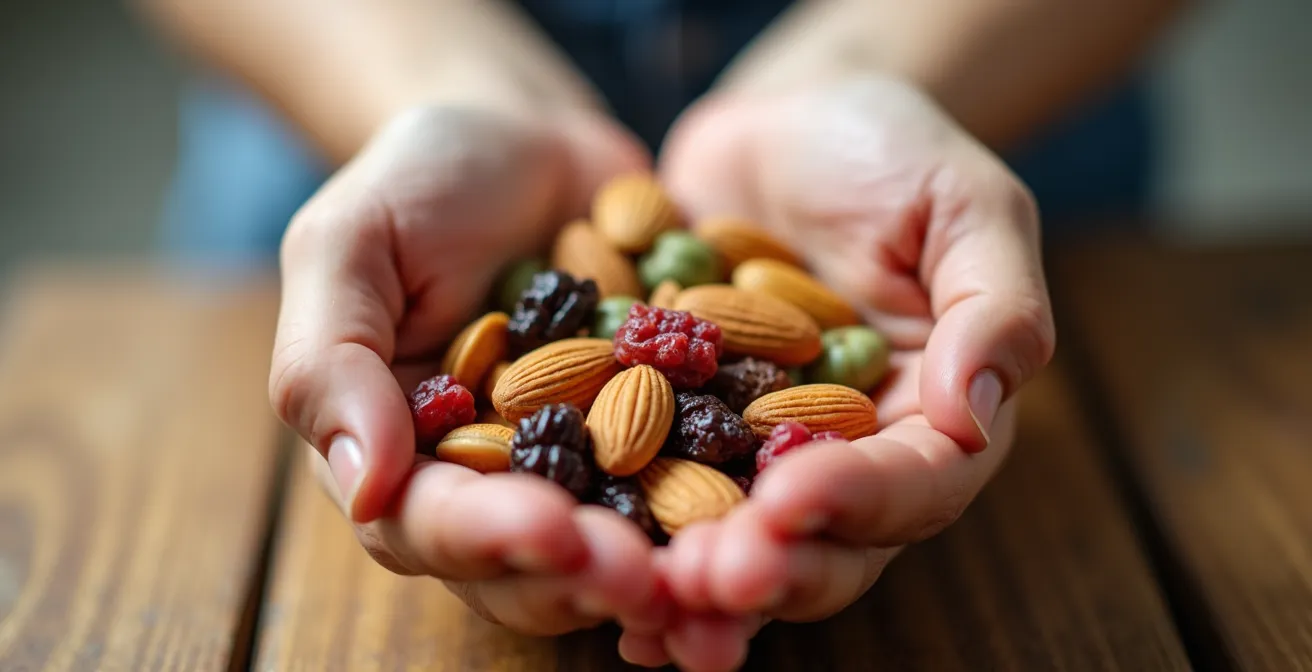
Crucially, this is a starting point, not a rigid rule. The goal is to tune into internal cues. On a day with soccer practice, a child may naturally need a larger fistful of “Go” foods for energy. On a quieter day, a standard portion might be enough. The most important tool is checking in: “How does your tummy feel? Are you still hungry, or are you feeling full and satisfied?” This teaches them to listen to their body’s signals, a skill far more valuable than memorizing portion sizes.
Ultimately, the Hand Method serves as a gentle visual cue, empowering kids to serve themselves while encouraging them to honor their own hunger and fullness levels above all else.
Total Ban vs. Moderation: Which Prevents Sugar Binging?
The question of sugar and “treat” foods is often the most stressful for parents. The instinct to protect children can lead to a policy of total restriction—banning cookies, candy, and ice cream from the house. While this comes from a place of love, it’s a strategy that almost always backfires. Psychology and studies on eating behaviors demonstrate that restrictive eating patterns are directly linked to binge-eating behaviors. When a food is forbidden, it becomes highly desirable. This creates a “restrict-guilt-binge” cycle: the child is deprived, craves the forbidden food, overeats it when they finally get access (at a party or a friend’s house), feels immense guilt, and the cycle repeats.
The antidote to this is planned moderation and teaching self-regulation. By neutralizing these foods and allowing them in a structured, non-shaming way, we take away their power. A fantastic strategy is the “Weekly Sweet Jar.” Here’s how it works:
- At the start of the week, you and your child select an agreed-upon number of small treats (e.g., 7-10) for their personal jar.
- The child has complete autonomy to decide when to eat them throughout the week. There is no parent policing or judgment.
- If they eat them all on the first day, you calmly and neutrally remind them that their jar is now empty until it’s refilled next week.
- Over time, children learn to self-regulate. They start to plan, savor their treats, and realize they have control over their choices.
This method teaches invaluable life skills: planning, decision-making, and understanding consequences in a low-pressure environment. It moves the parent from the role of “food police” to that of a supportive guide.
By incorporating all foods into a balanced life, we teach our children that there is no need to binge because no food is ever truly off-limits forever. This fosters a sense of calm and trust around all types of food.
The Risk of Labeling Foods “Junk” That Creates Guilt
Words have power, and the labels we attach to food can shape a child’s entire belief system about eating and self-worth. Terms like “junk food,” “cheat meal,” or even seemingly innocuous ones like “treats” can be loaded with judgment. When a child eats a food labeled “junk,” the implicit message is that they are consuming something worthless or even harmful. This can easily translate into feeling that *they* are doing something bad, leading to a deep-seated sense of guilt every time they eat those foods.
This moralistic labeling is the opposite of the food neutrality we aim to cultivate. As the Within Health Editorial Team points out, these categories create a damaging mental hierarchy.
Teaching kids about the food pyramid also creates a visual representation for ‘good’ foods to eat and ‘bad’ foods to eat, which is exactly the type of thinking we want to discourage in our children.
– Within Health Editorial Team, How to Talk to Your Kids About Diet Culture
The goal is to move away from any language that implies a food is inherently good or bad. Instead, we can use descriptive, non-judgmental language. A powerful alternative is to re-categorize these foods as “Sometimes Foods” and “Everyday Foods.” This reframes the conversation around frequency and balance, not morality. You can also link foods to context, such as “birthday party cake,” “ballgame hot dog,” or “holiday cookies.” This teaches that these foods are part of celebration and social connection, which is also a valid function of food. The core message should always be: “All foods can fit.”
By consciously choosing neutral language, we give our children the freedom to enjoy all foods without the heavy burden of guilt, allowing them to build a relationship with eating that is based on nourishment, pleasure, and connection.
School Lunch: How to Guide Kids to Pack Their Own Balanced Box?
The school lunchbox is a perfect daily opportunity to put these principles into practice. Empowering your child to pack their own lunch fosters independence, responsibility, and a deeper understanding of what makes a satisfying meal. Instead of dictating the contents, your role becomes that of a guide, providing a framework and a variety of options to choose from. This turns a daily chore into a hands-on learning experience in building a balanced meal.
A fun and effective way to guide their choices without being restrictive is the “Rainbow Challenge.” This encourages variety and a wide range of nutrients in a playful, visual way. You can set up “stations” for them to choose from, loosely based on the Go, Grow, and Glow model: one bin for a main “Go/Grow” item (like a sandwich, wrap, or pasta), one for fruits, and one for vegetables. Their mission is to include different colors throughout the week.
- Monday: Pack something red (e.g., strawberries, cherry tomatoes, red bell pepper strips).
- Tuesday: Add something orange (e.g., carrot sticks, an orange, cheese).
- Wednesday: Include something yellow (e.g., banana, corn, yellow squash).
- Thursday: Go for green (e.g., cucumber slices, grapes, snap peas).
- Friday: Find something blue or purple (e.g., blueberries, purple cabbage, blackberries).
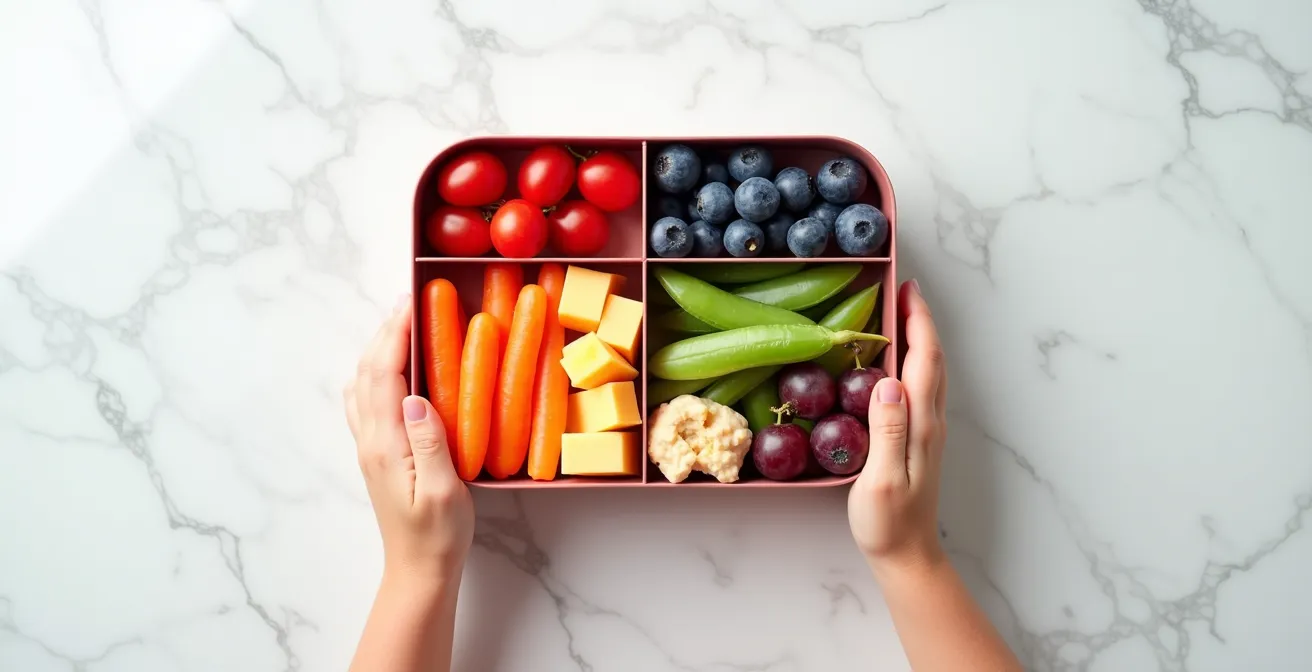
This simple game makes packing lunch an engaging activity. It shifts the focus from “you must eat a vegetable” to “let’s find a green food for your box today!” It naturally leads to a lunchbox filled with a variety of foods that provide sustained energy, building blocks for growth, and protective vitamins and minerals, all while reinforcing the idea that eating should be enjoyable and colorful.
This collaborative approach not only ensures they have a lunch they are more likely to eat but also builds their confidence and competence around food.
The Risk of Obsessing Over Growth That Leads to Feeding Anxiety
For many parents, the pediatrician’s office can be a source of intense anxiety. Watching the needle on the scale and seeing where your child falls on the growth chart can easily become an obsession. This hyper-focus on weight and size can create a tremendous amount of pressure that trickles down to the dinner table, leading to what is known as “feeding anxiety.” You might find yourself pleading, bargaining, or even demanding “just one more bite,” turning mealtimes into a battleground. This pressure teaches a child to ignore their own body’s signals of fullness and can damage their innate ability to self-regulate.
It’s crucial to remember that children’s growth happens in spurts, not in a straight, predictable line. A healthy, thriving child is defined by so much more than a number on a chart. Shifting your focus from weight to a more holistic view of well-being can liberate both you and your child from this cycle of anxiety. A child who is thriving will show it in countless ways. When you feel the anxiety creeping in, take a deep breath and look for these alternative signs of health instead.
This shift in perspective is a powerful tool for reducing your own anxiety, which in turn creates a more relaxed and positive eating environment for your child. It allows them to eat according to their appetite without pressure, which is the cornerstone of developing body trust.
Your Child’s Thriving Checklist: Beyond the Scale
- Energy Levels: Is your child energetic and actively playing throughout the day?
- Sleep Quality: Are they sleeping well and consistently through the night?
- Developmental Milestones: Are they meeting age-appropriate milestones for walking, talking, and social skills?
- Mood and Demeanor: Do they have a generally happy mood and show emotional regulation?
- Curiosity and Engagement: Do they show curiosity about the world and engage with their environment?
Trust that if your child is energetic, happy, and growing in their clothes (even if slowly), their body is getting what it needs. This trust is the greatest gift you can give them.
How to Incorporate Immune-Boosting Foods into a Picky Eater’s Diet?
When you have a picky eater, the goal of a “balanced diet” can feel like a fantasy. The desire to ensure they get immune-supporting nutrients like Vitamin C and Zinc can lead to mealtime stress and power struggles. The key here, as with all aspects of feeding, is to remove the pressure and add an element of fun and creativity. Instead of focusing on forcing a specific food, focus on repeated, low-pressure exposure and connecting foods to positive, empowering concepts.
One of the most effective ways to do this is to rebrand these foods with “superhero powers.” This taps into a child’s imagination and connects the food to a tangible, exciting benefit. Instead of “eat your oranges, they have Vitamin C,” you can say, “Oranges are ‘Shield Builders’ that help protect your body from germs!” This functional, playful language can pique their interest. Here are a few examples:
- Yogurt with probiotics: “Gut Buddy Food” that keeps the good helpers in your tummy happy.
- Zinc-rich foods (beans, nuts): “Wound Healers” that help your boo-boos get better faster.
- Colorful veggies: “Invisibility Cloaks” that help you hide from germs.
- Whole grains: “Energy Crystals” that give you power to play all day long.
Another powerful strategy is involving them in the food process. As CDC research on school nutrition programs shows, activities like gardening or cooking significantly increase a child’s willingness to try new fruits and vegetables. When a child helps grow a tomato or wash a carrot, it becomes *their* food, and they develop a sense of ownership and curiosity that no amount of pleading can replicate.
By shifting from pressure to play and from demanding to involving, you create positive experiences that will gradually expand your picky eater’s palate over time.
Key takeaways
- Shift your language from “good vs. bad” to what foods *do* for the body (Go, Grow, Glow).
- Use a child’s own hand as a flexible guide for portions, prioritizing their internal hunger and fullness cues.
- Avoid total bans on “treats”; instead, teach self-regulation through planned moderation to prevent binge cycles.
How to Keep Teenagers at the Dinner Table for More Than 10 Minutes?
As children grow into teenagers, the challenges around food and family meals evolve. The quick “grab-and-go” meal becomes the norm as schedules fill up and independence grows. While it may seem like a small thing, the erosion of the family dinner is a significant loss. This shared time is not just about nutrition; it’s a vital touchpoint for connection, communication, and modeling a healthy relationship with food. Keeping a teenager engaged at the table requires a shift in strategy from mandate to collaboration.
The key to bringing them back is to give them a sense of ownership and make the experience more than just a meal. Turn the dinner table into an event they want to be a part of. One of the best ways to do this is by instituting “Teen-Led Theme Nights.” Let them be in charge of the menu and even the preparation. This taps into their desire for autonomy and can connect to their world in a fun way. Consider ideas like:
- TikTok Made Me Cook It: The teen chooses a viral recipe they’ve seen online for the family to try together.
- Build-Your-Own Bar: Offer a spread for tacos, pizzas, or rice bowls where everyone can customize their own plate.
- International Night: The teen picks a country, and the family explores that cuisine together, perhaps even with accompanying music or decorations.
- Takeout Remake Night: Challenge yourselves to recreate a favorite restaurant meal at home.
This approach transforms dinner from a passive obligation into an active, engaging experience. It makes them a stakeholder in the meal, not just a consumer. The food itself becomes a vehicle for conversation, creativity, and connection.
By making the dinner table a place of shared experience and fun, you’re not just getting them to sit for more than ten minutes; you’re reinforcing the idea that food is about community and connection, a crucial lesson that will serve them for the rest of their lives.