Cooking for Kids
Inviting children into the kitchen transforms a daily necessity into a powerful learning laboratory. Cooking together offers far more than meal preparation—it builds mathematical thinking through measurements, scientific curiosity through ingredient transformations, and cultural awareness through recipe exploration. Yet many parents hesitate, worried about mess, safety, or mealtime battles that already exist.
This comprehensive resource connects the foundational elements of cooking with kids: from setting up a safe workspace and choosing first recipes, to understanding the psychology behind picky eating, expanding palates through playful techniques, teaching nutrition through hands-on snack creation, and strengthening family bonds through intentional mealtime rituals. Whether your child is a cautious eater or an adventurous taster, these evidence-based approaches provide a roadmap for making the kitchen a place of joy, learning, and connection.
Why Start Cooking with Kids? The Educational Foundation
The kitchen serves as an unparalleled classroom where abstract concepts become tangible. When a five-year-old measures flour, they’re practicing fractions. When they observe dough rising, they’re witnessing biological processes. This hands-on learning creates neural pathways that connect food preparation with positive emotions and intellectual curiosity.
Building Lifelong Nutrition Awareness
Children who participate in cooking develop a fundamentally different relationship with food. Research consistently shows that kids who help prepare meals demonstrate greater willingness to try new foods—often tasting vegetables they previously rejected. This isn’t about trickery; it’s about ownership and demystification.
When a child washes lettuce, tears herbs, or arranges vegetables on a baking sheet, they invest effort that transforms the food from “something imposed by adults” into “something I created.” This psychological shift has lasting implications, as culinary involvement during childhood correlates with healthier eating patterns in adolescence and adulthood.
Creating a Safe and Inviting Kitchen Space
A kid-friendly cooking station doesn’t require expensive equipment—just thoughtful adaptation. The essentials include a stable step stool for counter access, child-sized tools that actually work (flimsy plastic gadgets frustrate rather than empower), and a dedicated low drawer or shelf where children can independently access their cooking items.
Safety begins with clear boundaries. Establish a visual “hot zone” around the stove using colorful tape on the floor, teach the “push not pull” rule for pot handles, and demonstrate the proper claw grip for holding food while an adult handles the knife. These concrete guidelines provide freedom within structure—children understand exactly where they can explore independently and where adult supervision is mandatory.
Choosing Age-Appropriate First Recipes
Successful first cooking experiences share common characteristics: minimal steps, visible results, and quick completion. A three-year-old can successfully mash bananas for pancakes, stir yogurt with fruit, or arrange cheese on crackers. These aren’t just “fake tasks”—they’re genuine contributions to family meals that build competence and confidence.
As skills develop, progress to recipes with simple cause-and-effect: watching cheese melt on toast, observing cookies spread in the oven, or seeing smoothie ingredients transform in a blender. The goal isn’t culinary sophistication—it’s creating positive associations between effort, transformation, and delicious results that motivate continued participation.
Understanding the Psychology of Picky Eating
Selective eating frustrates parents, but it’s rarely defiance. Understanding the biological and psychological roots of food rejection transforms battlegrounds into opportunities for patient exploration. The key lies in distinguishing normal developmental caution from sensory processing challenges that may require professional support.
The Evolutionary Roots of Food Selectivity
Food neophobia—the fear of new foods—peaks between ages two and six for sound evolutionary reasons. In ancestral environments, toddlers who eagerly consumed unfamiliar plants faced genuine poisoning risks. Those who approached new foods cautiously survived to pass on their genes. Your child’s rejection of green vegetables isn’t irrational; it’s an ancient protective mechanism.
This perspective shift matters because it replaces frustration with empathy. Children aren’t being difficult—they’re responding to deep-seated instincts. Overcoming this wariness requires repeated, pressure-free exposure. Research indicates that 10-15 neutral encounters with a new food (seeing it, smelling it, touching it) often precede acceptance, but forced tasting can set back progress significantly.
Pressure vs. Autonomy at the Table
The “clean plate club” and “three-bite rule” often backfire by triggering power struggles. When eating becomes a battle, children learn to ignore their internal hunger and fullness cues—precisely the opposite of healthy self-regulation. The alternative approach divides responsibility: adults decide what food is offered, when, and where; children decide whether and how much to eat from what’s provided.
This framework, supported by pediatric nutrition experts, removes mealtime pressure while maintaining nutritional boundaries. Serving meals family-style—placing dishes on the table for self-service—reinforces this autonomy. Children develop agency and decision-making skills while parents maintain nutritional standards by controlling which options reach the table.
Recognizing Sensory Sensitivities
Some children experience textures, smells, or flavors with overwhelming intensity due to sensory processing differences. These aren’t preferences—they’re neurological responses that can trigger genuine distress. Signs include extreme reactions to food smells, gagging on certain textures, or accepting only foods of specific colors or temperatures.
If your child’s selectivity severely limits food groups (eating fewer than 20 foods total, for example), or if mealtimes consistently involve distress rather than mere preference, consultation with a pediatric occupational therapist or feeding specialist provides valuable assessment. These professionals distinguish typical pickiness from sensory challenges requiring specialized intervention.
How Can You Expand Your Child’s Palate?
Palate expansion succeeds through curiosity and play rather than coercion. The most effective techniques transform tasting into exploration—removing the pressure of “eating” while building familiarity through multiple senses. These approaches work with children’s developmental psychology rather than against it.
The Bridge Method and Food Pairing
The bridge method leverages accepted foods as pathways to new ones by identifying shared characteristics. If your child loves buttery pasta but rejects all vegetables, roasted cauliflower tossed with butter and parmesan shares that familiar creamy richness. If sweet fruits are favorites, roasted carrots or bell peppers offer similar sweetness through different vehicles.
This isn’t hidden vegetables—it’s transparent connection-making. Explain the link: “You enjoy the sweetness in strawberries; these roasted carrots are also naturally sweet.” Pairing familiar with unfamiliar on the same plate reduces anxiety. Even if the new food remains untouched initially, repeated proximity builds familiarity without pressure.
Gamifying Taste Exploration
Structured tasting games transform eating from obligation into scientific investigation. Create a “taste testing laboratory” where children rate foods on researcher-style charts: scoring sweetness, sourness, crunchiness, or visual appeal on simple scales. This analytical distance removes the pressure of “do you like it?” in favor of descriptive observation.
Exploring the five basic tastes—sweet, salty, sour, bitter, and umami—provides educational framework. Dedicate weekly tasting sessions to each category: lemon versus lime for sour, different cheeses for umami, various herbs for bitter. Event-based tasting (“tasting foods from different countries” or “rainbow tasting challenge”) adds narrative excitement while normalizing diverse flavors.
Making Unfamiliar Foods Feel Safe
Exotic or unusual foods become approachable through storytelling and cultural context. Before introducing sushi, read books about Japan and locate it on a map. Before trying mango, discuss tropical climates where it grows. This contextualization transforms “weird food” into “food from an interesting place,” shifting the frame from threat to adventure.
Blind tasting versus visual presentation each serve distinct purposes. Blind tasting eliminates visual bias—a child who “hates green things” might enjoy pureed pea soup without seeing it. However, visual transparency builds trust over time; children need to learn that what they see matches what they taste. Alternate between these approaches based on specific situations and your child’s temperament.
Teaching Nutrition Through Snack Preparation
Snack preparation offers ideal teaching moments—stakes are lower than dinner, portions are smaller, and children can often work more independently. These sessions become opportunities to discuss ingredient quality, decode food labels, and understand how simple swaps dramatically alter nutritional profiles.
Batch Cooking as a Learning Opportunity
Making a large batch of energy balls, granola bars, or muffins on Sunday afternoon teaches planning, multiplication (doubling recipes), and delayed gratification. Children observe how investing two hours creates snacks for the entire week, learning efficiency and food economics. Portioning homemade snacks into individual containers builds organizational skills and ownership.
During batch cooking, discuss ingredient functions: why oats provide lasting energy, how nuts contribute healthy fats, why dates bind ingredients while adding sweetness. This functional understanding demystifies nutrition, making it concrete rather than abstract adult rules.
Decoding Store-Bought Ingredients Together
Comparing homemade versions to store-bought equivalents reveals hidden ingredients and processing realities. Make granola together using oats, nuts, honey, and oil—then read a commercial granola label noting the fifteen additional ingredients. This isn’t about demonizing processed food; it’s about building informed awareness.
Turn label reading into a game: find the sugars hiding under different names (corn syrup, dextrose, maltose), count how many ingredients you can pronounce, or identify the first three ingredients (which comprise the majority of the product). These activities develop critical thinking and literacy skills alongside nutrition awareness.
Smart Ingredient Swaps for Better Health
Ingredient substitution demonstrates that healthier choices don’t require sacrifice. Replace half the butter in muffins with mashed banana or applesauce—children taste-test to discover the texture remains delicious. Use Greek yogurt instead of sour cream in dips. Blend white beans into smoothies for protein without altering flavor.
The revelation that small changes create meaningful improvements—without deprivation—establishes a sustainable approach to nutrition. Children learn that healthy eating isn’t about restriction but about thoughtful choices that honor both nutrition and enjoyment.
Strengthening Family Bonds Through Mealtime Rituals
The sociology of the dinner table reveals that shared meals contribute profoundly to family cohesion, communication skills, and children’s emotional well-being. Yet modern schedules challenge this tradition. Intentional ritual creation—adapted to contemporary realities—preserves these benefits without requiring perfection.
The Case for Screen-Free Dinners
Establishing a “no screen” rule during meals protects sacred family connection time. Devices fragment attention—each person engaging with external content rather than each other. The rule applies to everyone: no phones, tablets, or television for parents or children during designated mealtimes.
Implementation succeeds through preparation. Create a device basket where all phones rest during dinner, physically removing temptation. Explain the “why” to children: “This time is for our family to talk and connect.” Consistency matters more than frequency—even three screen-free dinners weekly create meaningful ritual if maintained reliably.
Building Conversation Traditions
Structured conversation starters prevent the dreaded “how was school?”/”fine” exchange. Rotate question ownership—each family member poses the dinner question on their assigned night. Questions might include: “What made you laugh today?” “If you could teach everyone one thing, what would it be?” or “What was harder than you expected?”
These rituals create psychological safety for sharing. Children anticipate their turn, prepare thoughts, and learn that their perspectives matter. Over months and years, this consistent practice builds communication skills, emotional vocabulary, and family identity.
Navigating Conflict and Modern Schedules
Dinner table conflict is inevitable—siblings bicker, exhausted parents snap, children complain about food. Address this openly: establish a “reset signal” (a bell, a phrase, or a gesture) anyone can use when conversation turns negative, prompting a collective breath and topic shift. This acknowledges reality while maintaining boundaries around mealtime atmosphere.
Modern schedules rarely permit seven family dinners weekly. Rather than abandoning the practice entirely, identify the realistic frequency—perhaps weeknight dinner happens together three times weekly, with weekend breakfast as the fourth shared meal. Consistency at lower frequency outperforms sporadic attempts at daily perfection. Adapt traditions to your reality rather than conforming to idealized standards that generate guilt and failure.
Cooking with children and gathering around the table represent investments that compound over time. The four-year-old who stirs pancake batter becomes the teenager who independently prepares family dinner. The picky eater who participates in tasting games gradually accepts diverse foods. The conversation rituals established in elementary years create communication channels that remain open during adolescence. Start small, remain consistent, and trust that these foundational practices build skills, health awareness, and family connection that endure well beyond childhood.

How to Keep Teenagers at the Dinner Table for More Than 10 Minutes?
The battle for dinnertime isn’t won with favorite meals or strict rules, but by transforming the table into a low-pressure…
Read more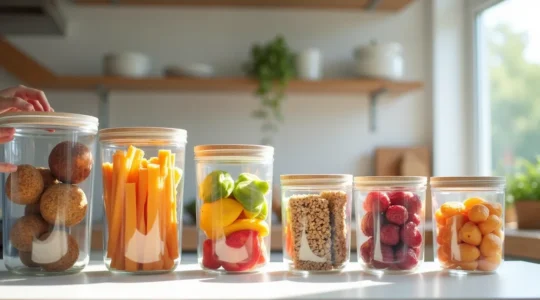
How to Batch-Cook School Snacks for the Whole Month?
In summary: Many “healthy” store-bought snacks contain excessive hidden sugars, making homemade options a better choice for nutritional control. A…
Read more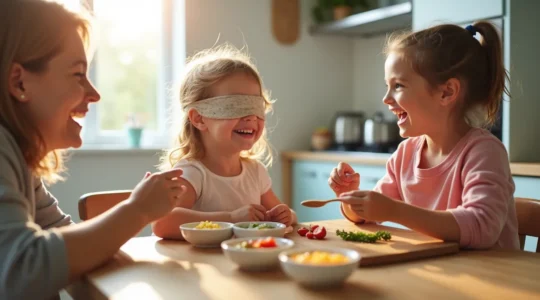
How to Organize a “Taste Test” Challenge at Home?
The secret to a successful taste test isn’t just making it a game; it’s transforming your kitchen into a fun,…
Read more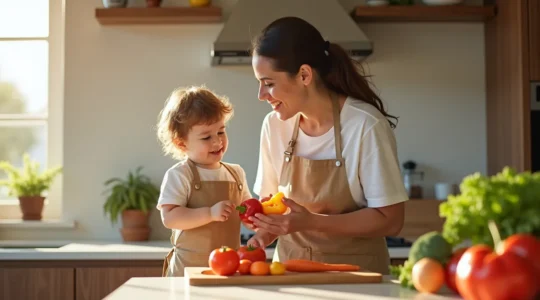
How to Introduce New Foods to a Picky Eater Without Tears?
In summary: Picky eating is a normal developmental phase (neophobia), not a reflection of your parenting. Success comes from systematically…
Read more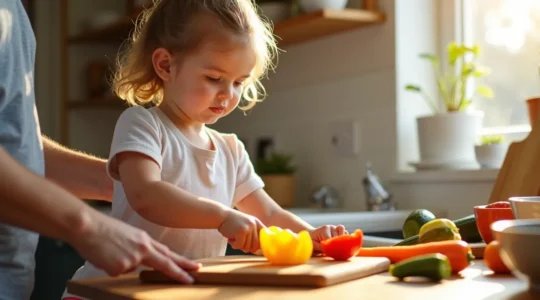
How to Teach Knife Skills to a 6-Year-Old Safely and Unlock Lifelong Confidence
The thought of a child with a knife is terrifying for most parents, leading them to avoid the kitchen altogether….
Read more